The best portable projectors balance easy transport with the picture and setup your viewing space needs. These two models take different approaches: Kodak offers a rechargeable palm-sized pico projector, while Optoma is a short-throw Full HD home projector with 3,500 lumens.
Quick Top Products
Kodak Ultra Mini Portable Projector
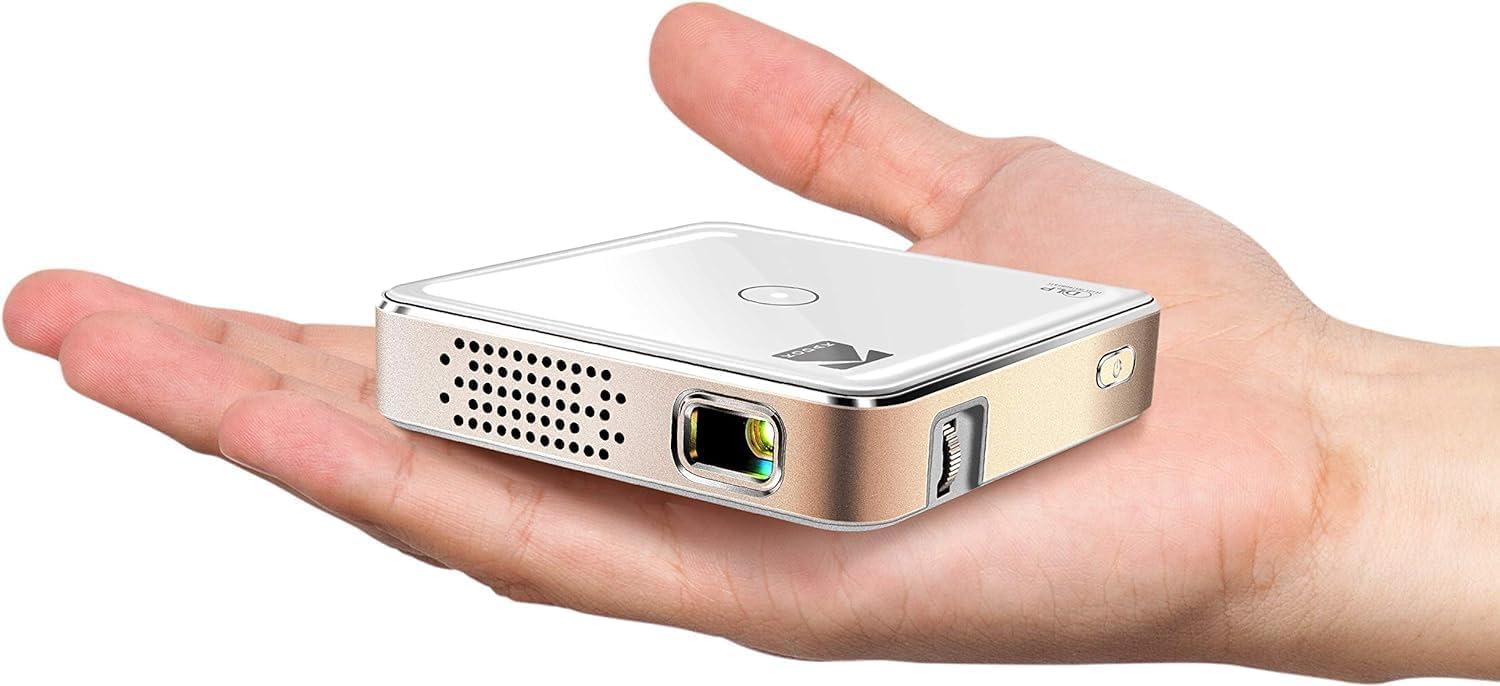
- Palm-sized DLP design with a rechargeable battery.
- Supports 1080p input and displays up to 100 inches.
- Includes a built-in speaker and HDMI, USB, MicroSD, and 3.5 mm connections.
Best For: People who want a rechargeable projector that can travel in a handbag or briefcase.

Optoma GT2000HDR
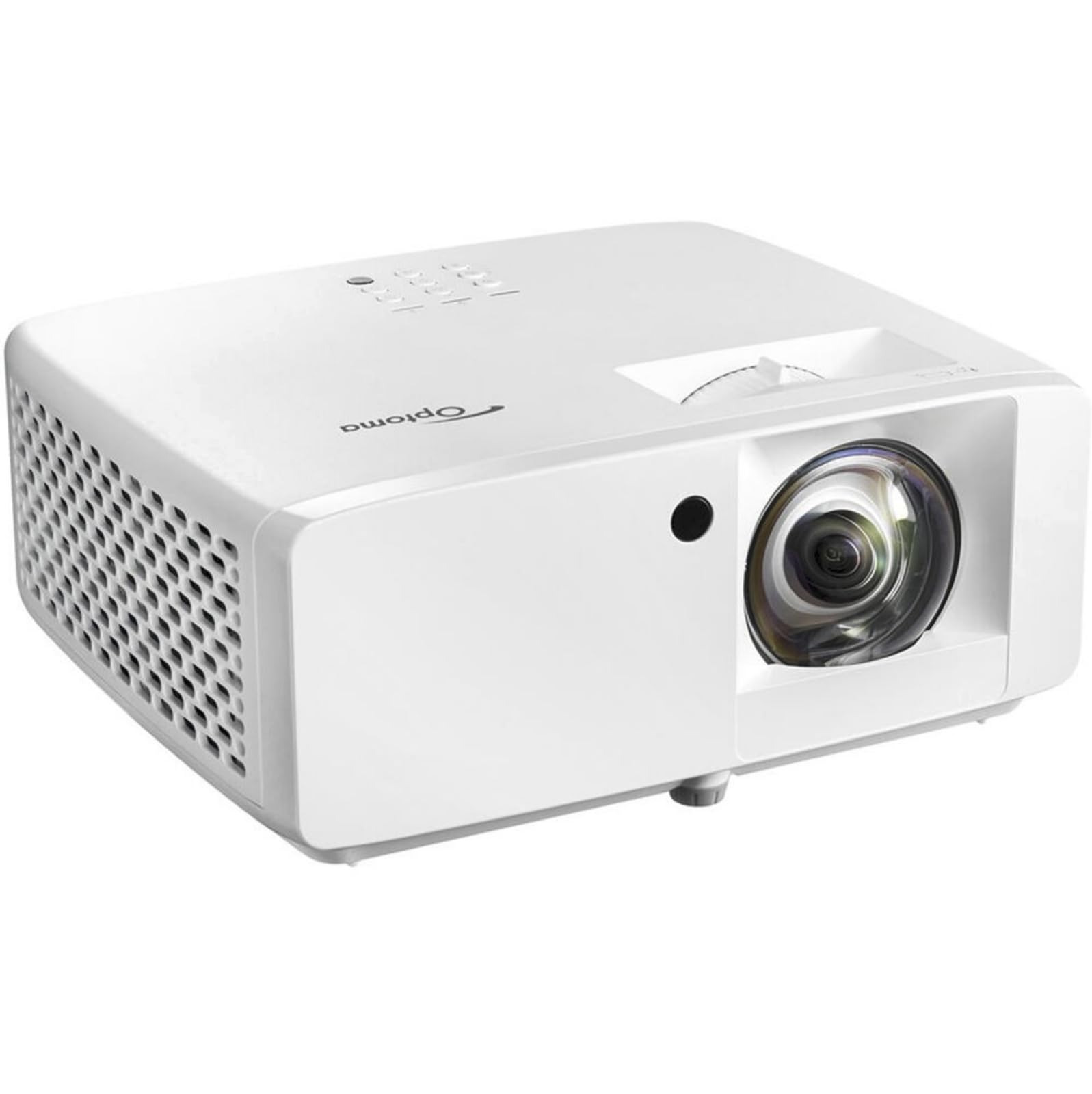
- Ultra-compact short-throw home projector.
- Full HD 1080p resolution.
- Rated at 3,500 lumens and powered by an external supply.
Best For: Home viewers who want a compact short-throw projector and have a suitable power connection nearby.
Palm-Sized Pico Projector
Kodak Ultra Mini Portable Projector - HD 1080p Support LED DLP Rechargeable Pico - 100 Display Built-in Speaker - HDMI USB and Micro SD - Compatible with iPhone iPad Android Phones"
The Kodak Ultra Mini is a palm-sized DLP projector designed for easy transport. It has a rechargeable battery, an onboard media player, a built-in speaker, and HDMI, USB, MicroSD, and 3.5 mm connections.
It supports 1080p input and displays up to 100 inches, making it a flexible option for movies, photos, presentations, and games. For a portable projector, the key tradeoff is room lighting: it performs best in a dark or dimly lit room.
Check whether your phone or tablet supports HDMI output and whether the available ports match your playback setup.
Best For: People who want a rechargeable projector that can travel in a handbag or briefcase.
| Pros | Cons |
|---|---|
|
|
Choose the Kodak if carrying convenience and flexible inputs matter more than room brightness. Its rechargeable design and palm-sized form make it suited to travel, small presentations, or casual viewing where you can control the light.
The 100-inch display capability is a maximum, so consider your room and viewing distance before planning around that size. Check device HDMI compatibility and decide whether the built-in speaker suits your setup or whether you will use the 3.5 mm output.
Short-Throw Full HD Home Viewing
Optoma GT2000HDR Ultra-Compact Short Throw Full HD Home Laser Projector
The Optoma GT2000HDR is an ultra-compact short-throw laser projector for home viewing. Its Full HD 1080p resolution and 3,500-lumen brightness distinguish it from a pocket-oriented pico model.
Short-throw projection can suit rooms where the projector needs to sit closer to the viewing surface, though the required placement depends on the space and screen size. The projector uses an external power supply, so portability here means a compact home setup rather than battery-powered use.
Check the throw distance, image size, and power-cable arrangement for your room before choosing it.
Best For: Home viewers who want a compact short-throw projector and have a suitable power connection nearby.
| Pros | Cons |
|---|---|
|
|
Choose the Optoma if your priority is a compact home installation with short-throw placement and Full HD resolution. Its 3,500-lumen rating sets it apart from the Kodak’s travel-focused feature set, while the external power supply makes it less suited to viewing away from an outlet.
Before buying, confirm that the throw distance works with your screen or wall and that you have a convenient place for the projector and power supply.
How to Choose Portable Projectors
How We Picked Portable Projectors
These picks serve two distinct meanings of portability: a rechargeable projector that travels easily and a compact home model designed for short-throw placement. We focused on features that help buyers decide how a projector will fit their routine, including size, power, inputs, resolution, brightness, and room placement.
The Kodak Ultra Mini suits people who want a palm-sized unit with a rechargeable battery and several playback connections. The Optoma GT2000HDR is a different fit: it is an ultra-compact Full HD home laser projector with a 3,500-lumen rating and an external power supply.
Both qualify as compact projectors, but their intended setups differ.
Comparing Portable Projectors
The Kodak emphasizes carrying convenience and flexible playback. It has HDMI, USB, MicroSD, and 3.5 mm connections, plus an onboard media player and built-in speaker.
Its performance is best in dark or dim rooms, so it fits travel viewing or casual use where lighting can be controlled.
The Optoma emphasizes short-throw home placement, Full HD resolution, and a 3,500-lumen rating. Its external power supply makes it a less convenient choice for use away from an outlet.
Think about where the projector will sit and how much space separates it from the screen before comparing the two models.
| Product | Standout features | Best for |
|---|---|---|
| Kodak Ultra Mini Portable ProjectorCheck Price |
| People who want a rechargeable projector that can travel in a handbag or briefcase. |
| Optoma GT2000HDRCheck Price |
| Home viewers who want a compact short-throw projector and have a suitable power connection nearby. |
Choosing a Projector for Travel or Home
For a portable projector you can take on the go, consider how you will power it, carry it, and connect your content. The Kodak’s rechargeable battery and palm-sized design address transport directly.
Check whether your phone or tablet supports HDMI output, or plan to use another compatible source through its HDMI, USB, or MicroSD connection.
For a home cinema projector, room geometry matters as much as the unit’s size. The Optoma’s short-throw design may suit a room with limited space between the projector and viewing surface.
Confirm the throw distance needed for your intended image size, and account for the external power supply when planning placement.
Brightness, Resolution, and Room Fit
Brightness figures are useful for comparing stated specifications, but they do not by themselves determine the right setup. The Kodak is intended for dark to dim rooms, while the Optoma has a 3,500-lumen rating.
If you plan to watch with some ambient light, consider the room’s lighting and the projector’s documented brightness together.
The Kodak supports 1080p input and can display up to 100 inches. That maximum does not guarantee the same viewing experience at every distance or in every room.
The Optoma is a Full HD 1080p projector; check its throw requirements and planned screen size to see whether its short-throw design fits the space.
Who Should Buy Which Portable Projector?
Choose the Kodak Ultra Mini if you value a rechargeable, palm-sized projector for travel, presentations, or casual viewing in a dim room. Its built-in speaker and several connection options give you ways to play content, but verify device compatibility and plan for controlled lighting.
Choose the Optoma GT2000HDR if you want a compact short-throw projector for a home setup and can accommodate its external power supply. Its Full HD resolution and 3,500-lumen rating are useful specifications to weigh against the Kodak’s battery-powered portability.
In either case, confirm the projector’s placement, screen size, and connections before buying.