The best WiFi routers for home office use balance dependable work connections with the coverage, ports, and device capacity your household needs. Choose a straightforward gigabit model for basic work, or consider Wi-Fi 7, mesh support, or VPN features when your setup calls for them.
Quick Top Products
TP-Link Archer BE600 BE9700
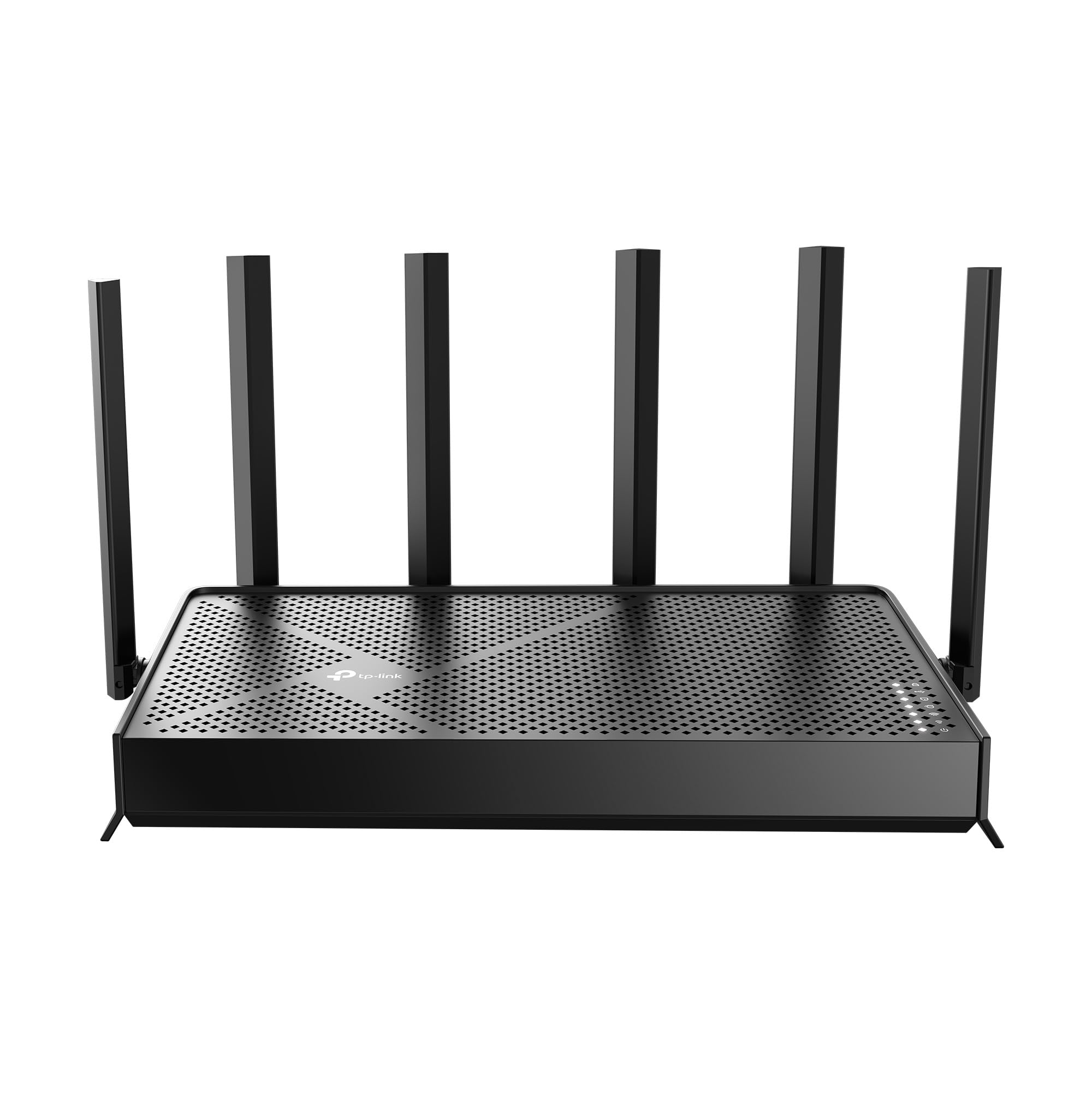
- Tri-band Wi-Fi 7 supports up to 5,765 Mbps on 6 GHz, 2,882 Mbps on 5 GHz, and 1,032 Mbps on 2.4 GHz.
- Wired connections include one 10 Gbps port, one 2.5 Gbps WAN/LAN port, and three 2.5 Gbps LAN ports.
- Rated for up to 2,600 square feet and 120 devices, with HomeShield and VPN client/server support.
Best For: Home offices with many devices and multi-gig wired equipment.

TP-Link Archer BE400 BE6500
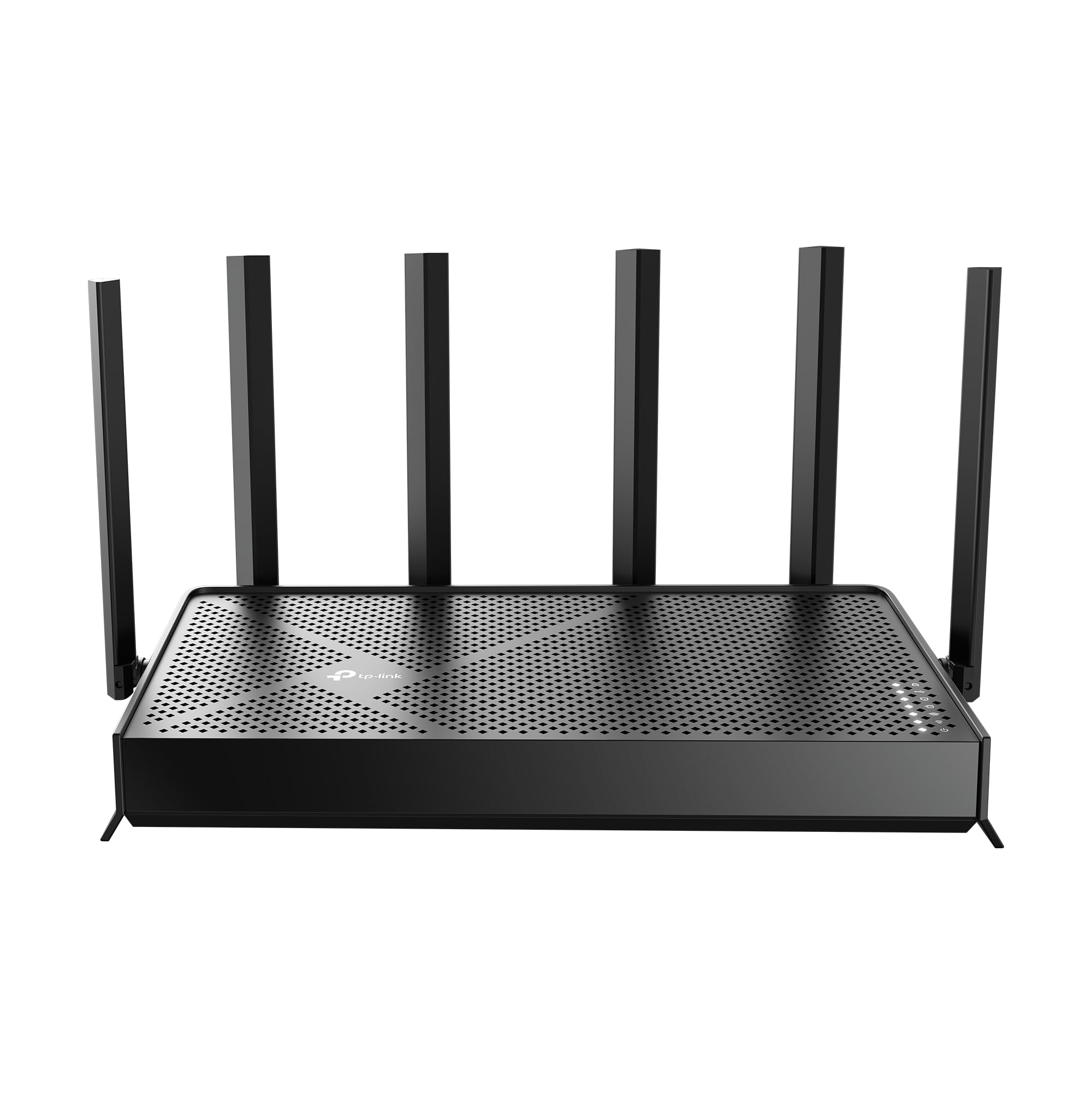
- Dual-band Wi-Fi 7 with MLO, Multi-RUs, and 4K-QAM.
- One 2.5 Gbps WAN/LAN port, one 2.5 Gbps LAN port, and three 1 Gbps LAN ports.
- Rated for up to 2,400 square feet and 90 devices; EasyMesh and VPN support are included.
Best For: Remote workers sharing a home network with many connected devices.
TP-Link Deco 7 BE23
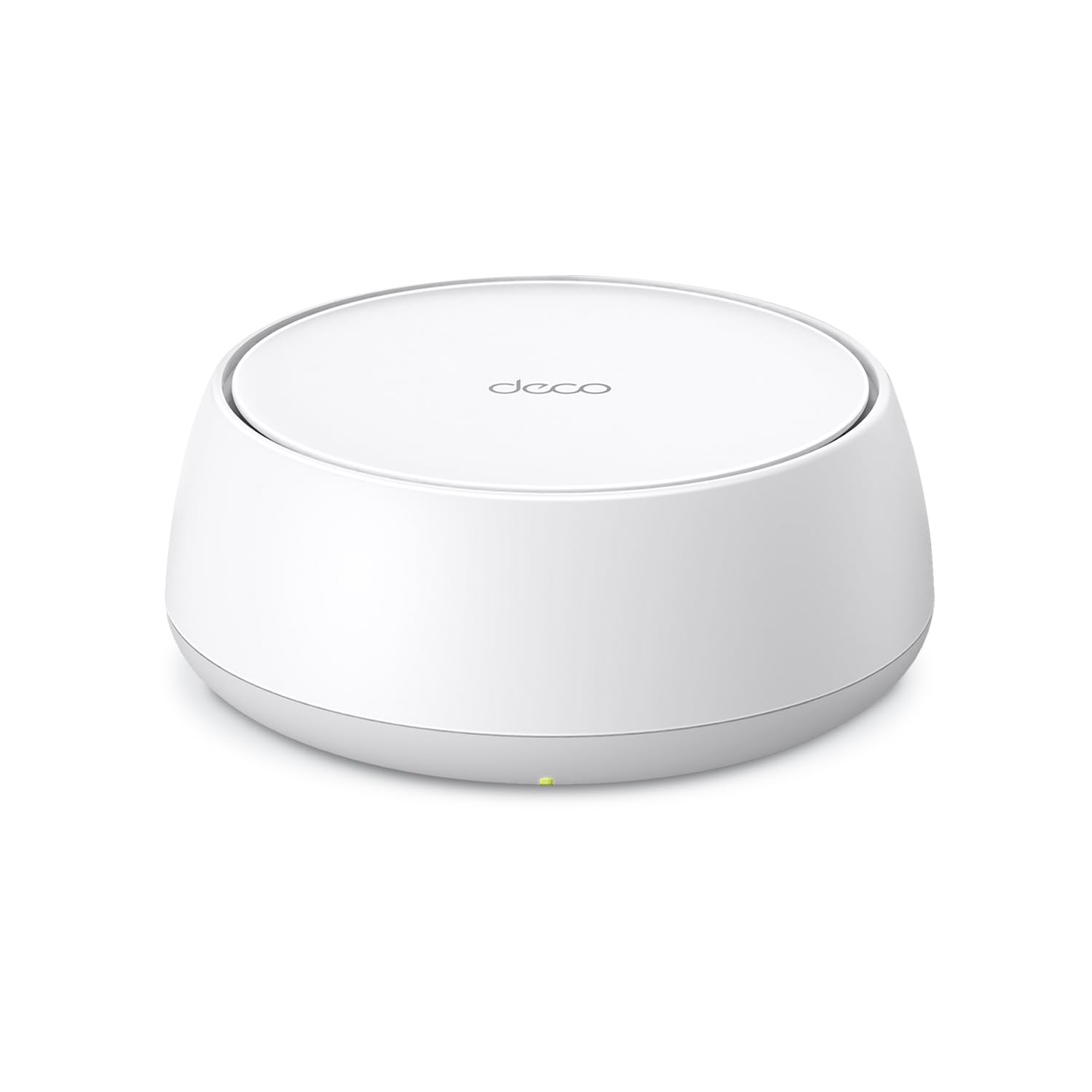
- Dual-band Wi-Fi 7 with MLO and up to 3.6 Gbps combined bandwidth.
- Two 2.5 Gbps WAN/LAN ports support wired devices and backhaul.
- One-pack coverage is rated up to 2,500 square feet and 150 devices, with Deco mesh expansion.
Best For: Home workers who want mesh roaming and room to expand coverage.
TP-Link Archer BE230 BE3600
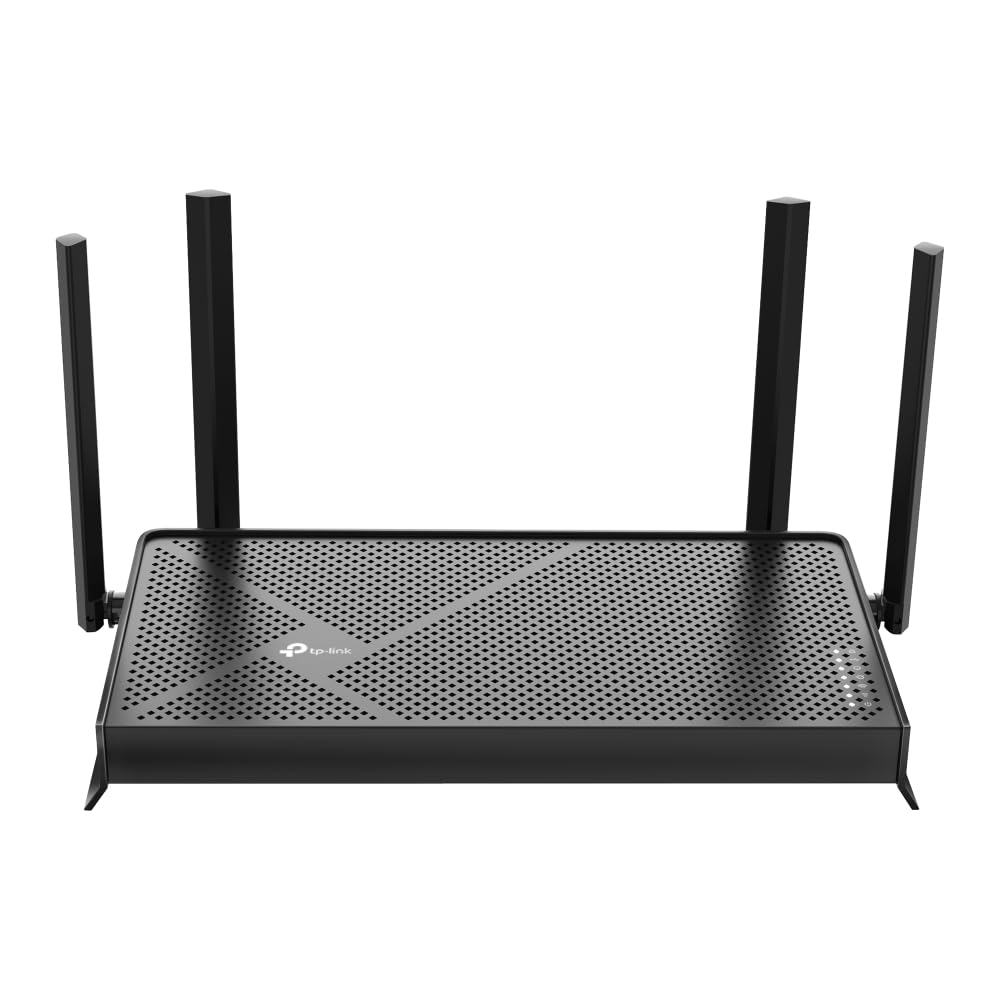
- Dual-band Wi-Fi 7 with MLO, Multi-RUs, and 4K-QAM.
- Two 2.5 Gbps ports plus three 1 Gbps LAN ports.
- Rated for up to 2,000 square feet and 60 devices, with EasyMesh compatibility.
Best For: Small offices that want Wi-Fi 7 features and a wired workstation.
TP-Link Archer AXE75 AXE5400
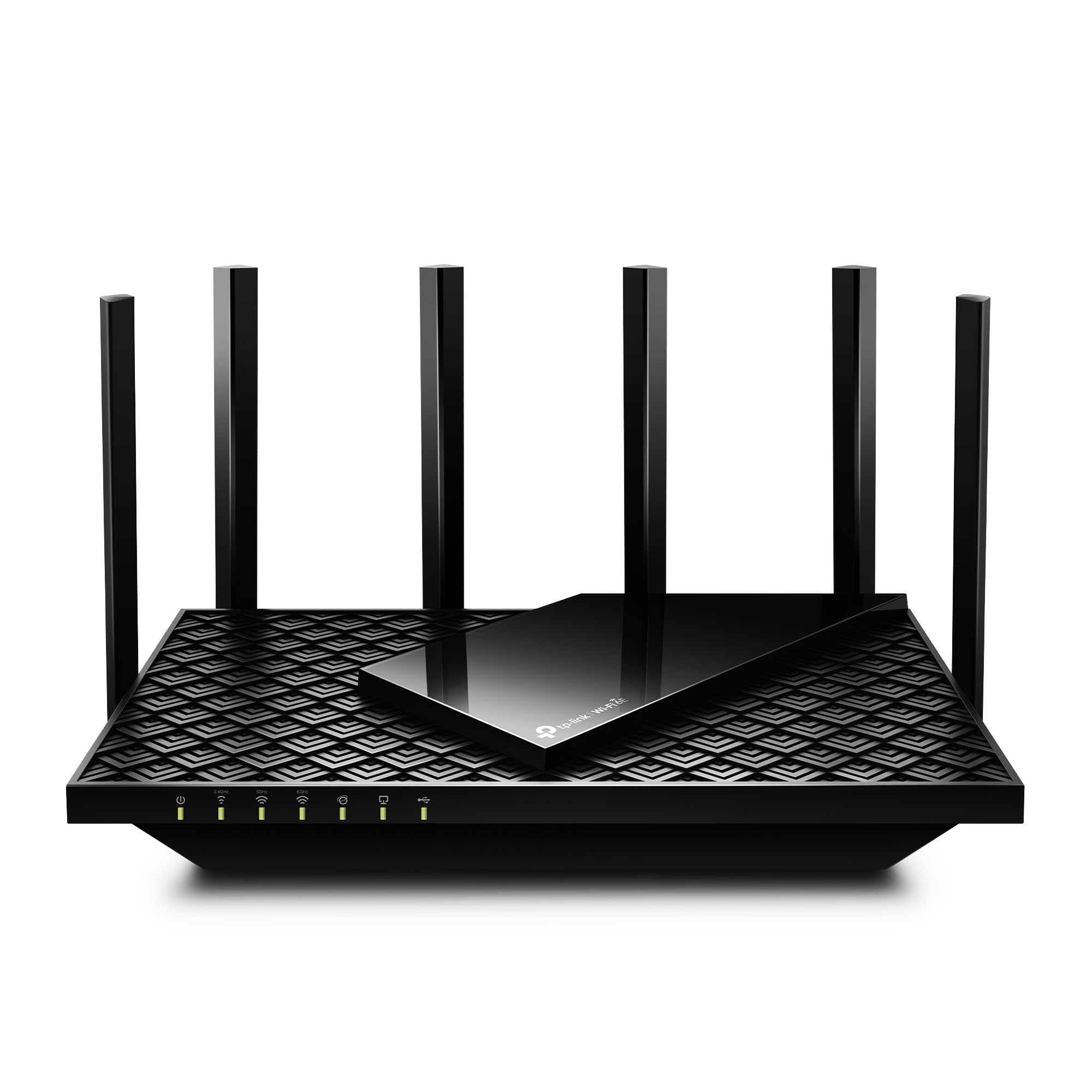
- Tri-band Wi-Fi 6E includes 6 GHz, 5 GHz, and 2.4 GHz bands.
- Supports OneMesh with a compatible TP-Link extender.
- VPN client/server functions and HomeShield features are included.
Best For: Home workers with Wi-Fi 6E devices who want a dedicated 6 GHz band.
Tenda RX12 Pro V3.0 AX3000
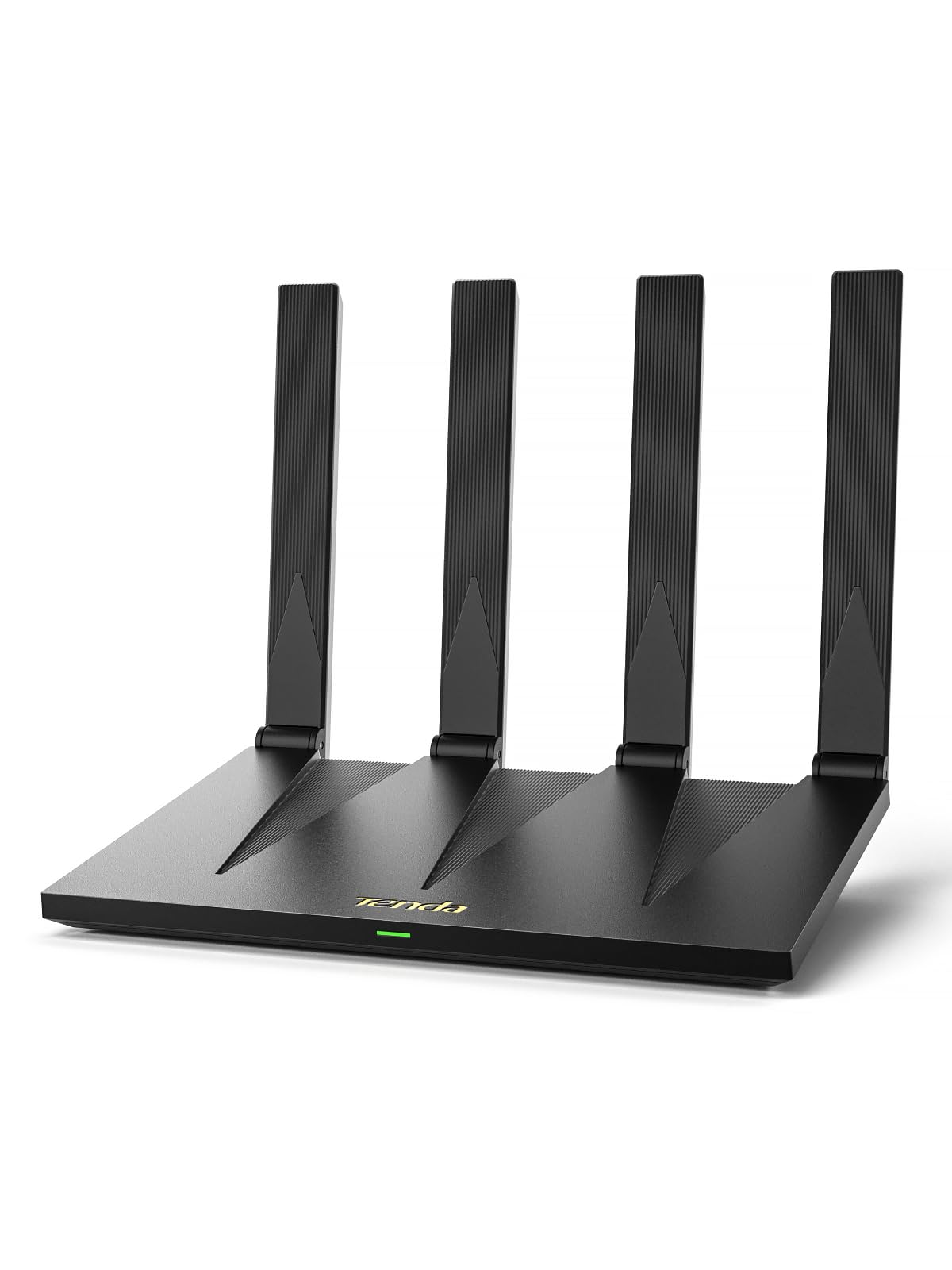
- Wi-Fi 6 dual-band speeds up to 2,402 Mbps on 5 GHz and 574 Mbps on 2.4 GHz.
- Four gigabit ports support wired devices, with automatic WAN/LAN recognition.
- VPN support includes OpenVPN and WireGuard via firmware update, plus PPTP/L2TP.
Best For: A smaller home office seeking basic dual-band Wi-Fi and VPN support.
TP-Link Archer GE650 BE11000
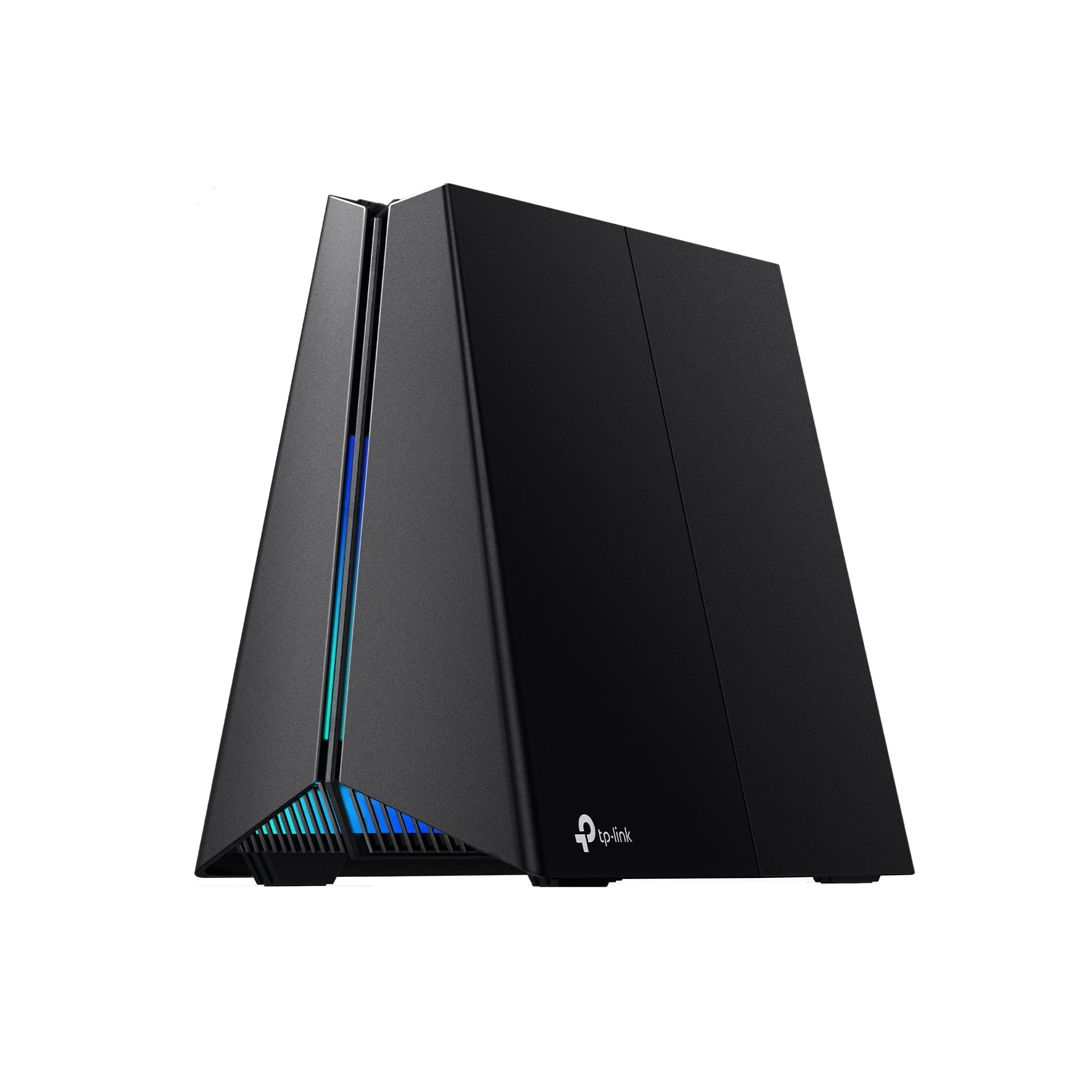
- Tri-band Wi-Fi 7 with a dedicated 5 GHz gaming band and 6 GHz support.
- Wired ports include two 5 Gbps and three 2.5 Gbps connections.
- Game acceleration, a game panel, HomeShield, and EasyMesh support are included.
Best For: A household where a work setup shares bandwidth with active gaming.
TP-Link Archer GE800 BE19000
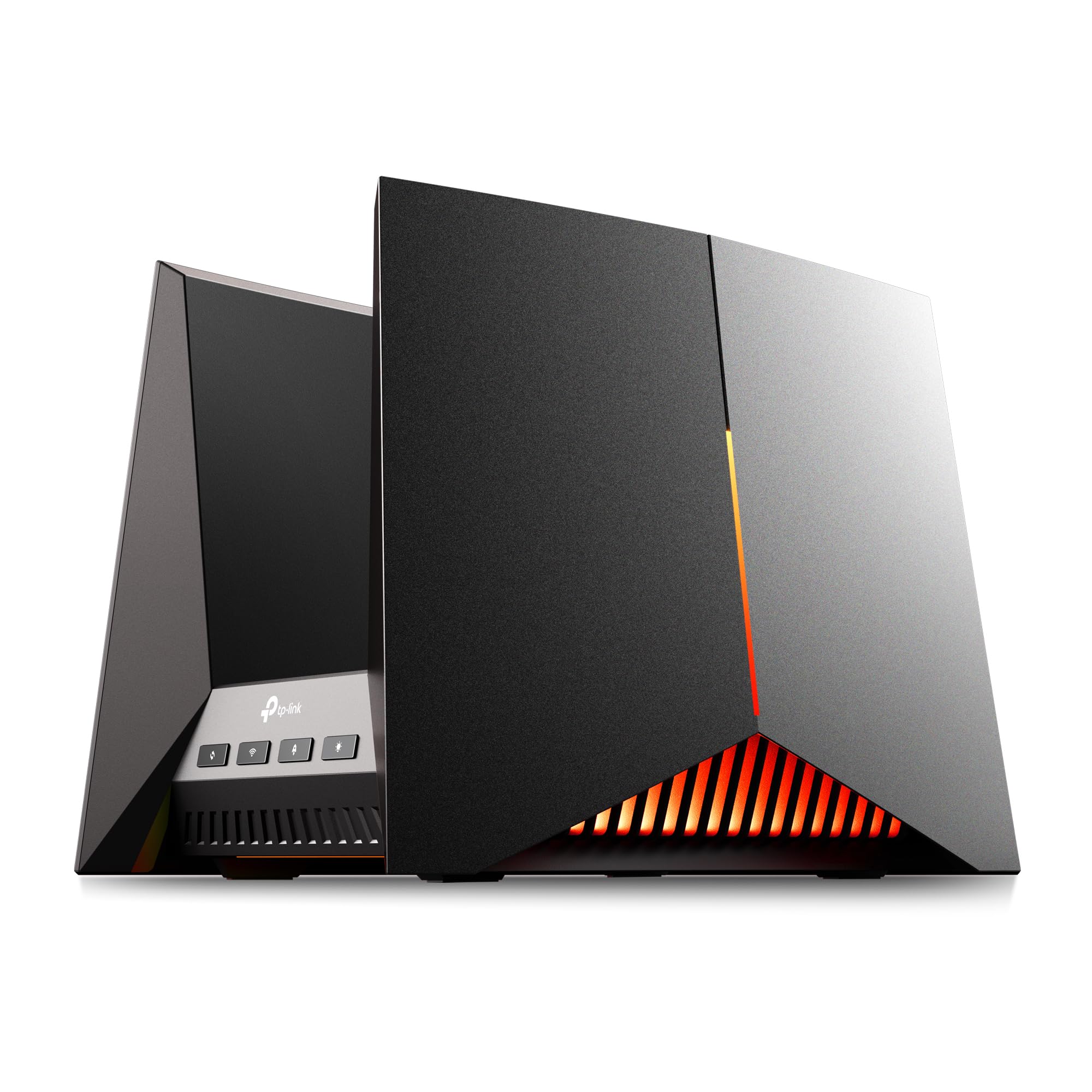
- Tri-band Wi-Fi 7 with up to 19 Gbps combined wireless speed and 12 streams.
- Two 10 Gbps and four 2.5 Gbps ports support multiple fast wired devices.
- Gaming acceleration, a performance panel, RGB lighting, HomeShield, and EasyMesh are included.
Best For: Power users who need many fast wired connections and also game at home.
TP-Link Roam 7 BE3600
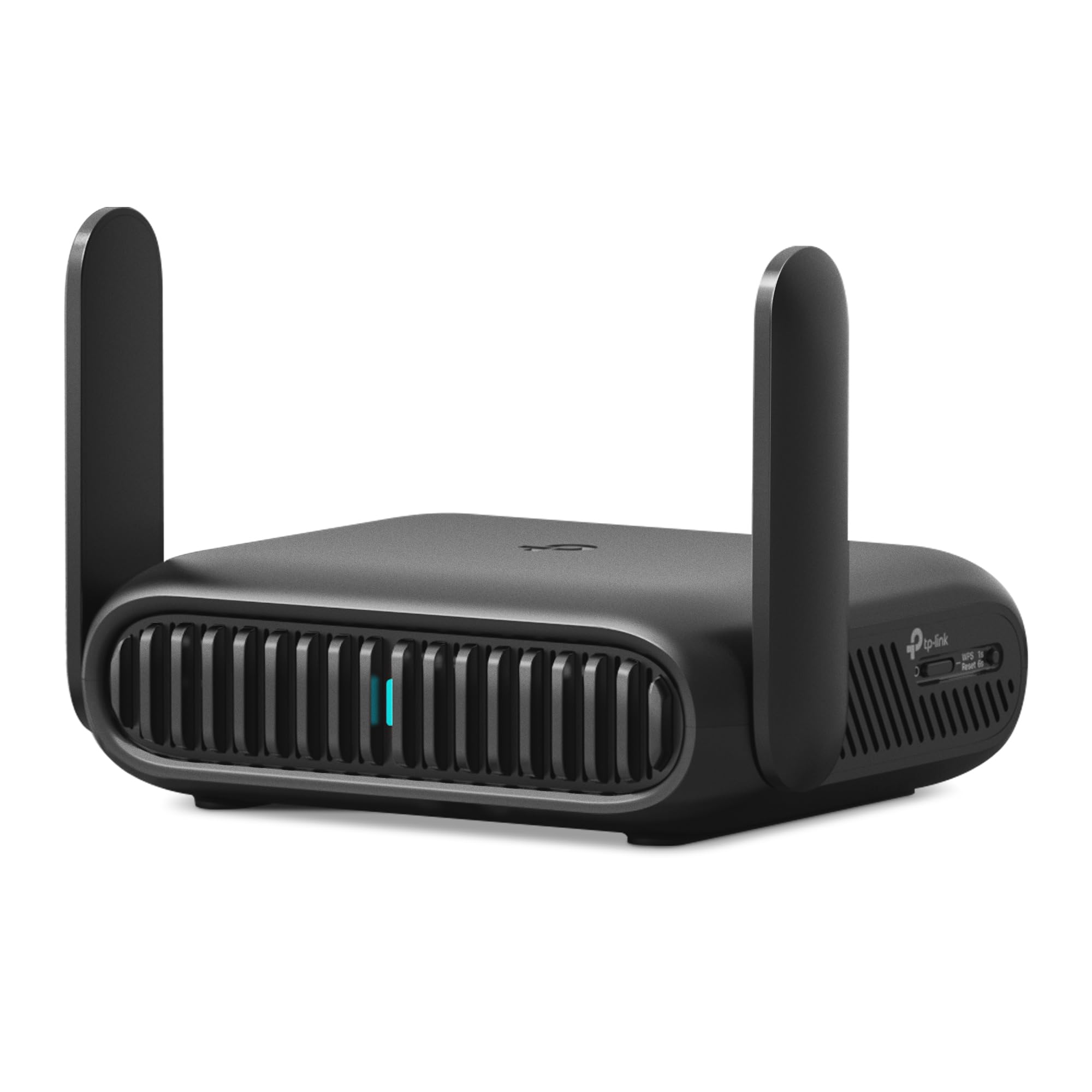
- Creates a private network from public Wi-Fi; supports up to 90 devices.
- Multiple modes include hotspot, router, AP, repeater, and client.
- OpenVPN and WireGuard support, USB-C power, and a 2.5 Gbps WAN port.
Best For: Remote workers who need a private network while using hotel or public Wi-Fi.
TP-Link Roam 6 AX1500
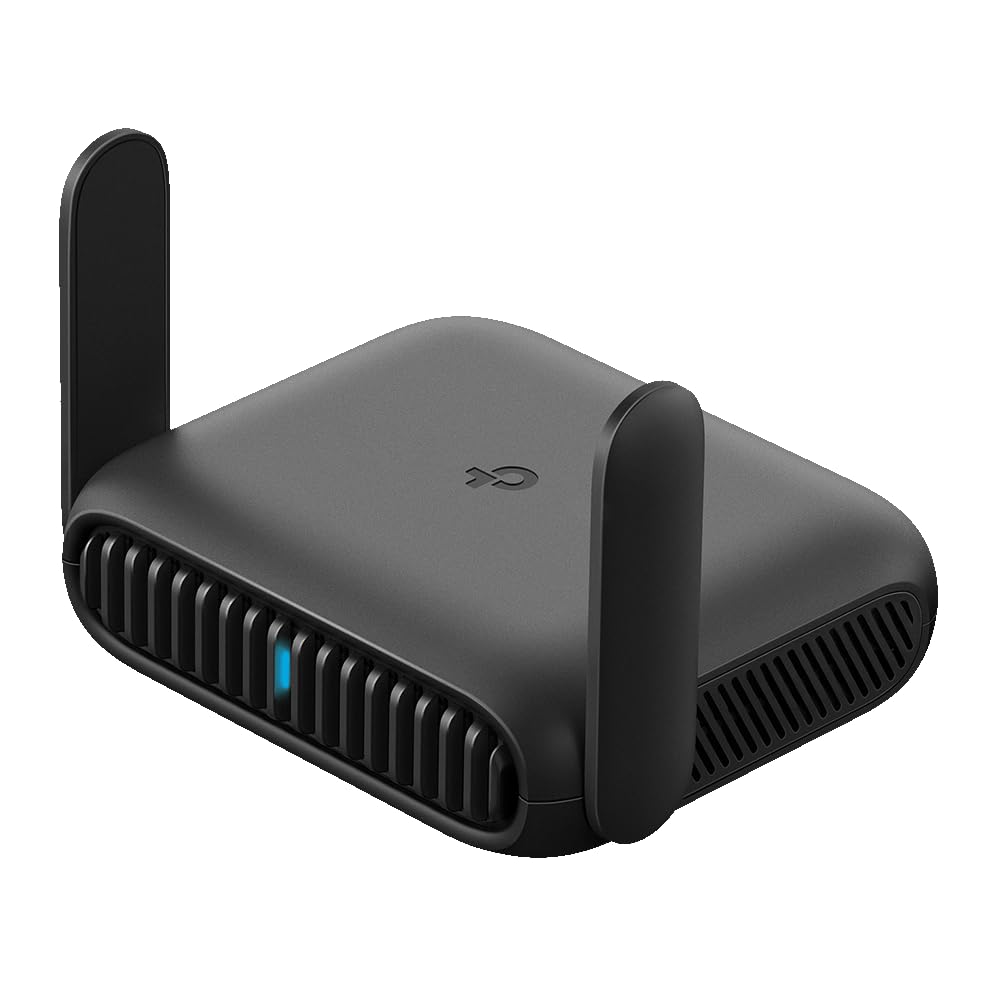
- Portable Wi-Fi 6 router with public Wi-Fi sharing and USB phone tethering.
- OpenVPN and WireGuard support with captive portal authentication.
- Two gigabit ports and capacity for up to 60 devices.
Best For: Traveling workers who want portable private Wi-Fi and basic wired connectivity.
Tri-Band Wi-Fi 7 for a Busy Home Office
TP-Link Tri-Band BE9700 WiFi 7 Router (Archer BE600) – 10G Port, 2.5G Port, 3× 2.5G LAN, 320MHz Channel, Covers up to 2,600 sq. ft., 120 Devices, VPN, HomeShield Security
The Archer BE600 combines three Wi-Fi bands with a 10 Gbps WAN/LAN port, a 2.5 Gbps WAN/LAN port, and three 2.5 Gbps LAN ports. That mix suits a home office where a fast internet connection and several wired devices matter alongside wireless laptops and phones.
It supports Wi-Fi 7 features including Multi-Link Operation and channels up to 320 MHz, with coverage rated up to 2,600 square feet for up to 120 devices. HomeShield and VPN client and server support add network management options.
The tradeoff is that this model may be more capability than a small office with ordinary gigabit internet needs.
Best For: Home offices with many devices and multi-gig wired equipment.
| Pros | Cons |
|---|---|
|
|
Choose the BE600 when your home office shares a network with many devices or you want several multi-gig wired connections. Its five-band and port options stand out among the listed routers, but they make less difference if your modem, plan, and work devices are all limited to gigabit speeds.
Check the WAN/LAN port assignments against your modem and workstation needs, and consider whether one router's rated coverage is enough for your floor plan.
High Device Capacity with Wi-Fi 7
TP-Link BE6500 Dual-Band WiFi 7 Router (BE400) – Dual 2.5Gbps Ports, USB 3.0, Covers up to 2,400 sq. ft., 90 Devices, Quad-Core CPU, HomeShield, Private IoT, Free Expert Support
The Archer BE400 is a dual-band Wi-Fi 7 router rated for coverage up to 2,400 square feet and as many as 90 devices. Its 5 GHz band supports up to 5,764 Mbps and its 2.4 GHz band up to 688 Mbps, while Multi-Link Operation combines bands for throughput and latency benefits on compatible devices.
For a home office with family streaming and smart devices, its capacity figures and six antennas offer useful headroom. Two 2.5 Gbps ports and three gigabit LAN ports provide wired options.
It lacks a 6 GHz band, so consider a tri-band model if access to that band is a priority.
Best For: Remote workers sharing a home network with many connected devices.
| Pros | Cons |
|---|---|
|
|
The BE400 is a practical fit when many home devices share bandwidth and you want Wi-Fi 7 plus multi-gig wired connections. Its 90-device rating is higher than the BE230's 60-device rating, while both are dual-band models.
Check whether the 2.5 Gbps WAN/LAN port is needed for your modem, and whether your important wireless devices can use Wi-Fi 7 features. For a smaller device count, a less elaborate router may be enough.
Mesh-Ready Coverage for Wider Homes
TP-Link Deco 7 BE23 Dual-Band BE3600 WiFi 7 Mesh Wi-Fi Router | 4-Stream 3.6 Gbps,160 Mhz | Covers up to 2,500 Sq.Ft | 2× 2.5G Ports Wired Backhaul | VPN, MLO, HomeShield, Free Expert Help, 1-Pack
The Deco 7 BE23 pairs Wi-Fi 7 with a mesh-first design, making it a relevant choice when an office is separated from the modem or when coverage is uneven across rooms. This one-pack unit is rated for up to 2,500 square feet and 150 devices.
It has two 2.5 Gbps WAN/LAN ports and supports both wired and wireless backhaul, which can help when adding compatible Deco units. AI roaming keeps a unified network name as devices move around the home.
The one-pack range is still a maximum, and expanding coverage requires compatible mesh equipment. It is dual-band and does not offer a 6 GHz band.
Best For: Home workers who want mesh roaming and room to expand coverage.
| Pros | Cons |
|---|---|
|
|
Pick the Deco 7 when smooth movement between rooms or the option to add mesh nodes matters more than a traditional single-router setup. Its 150-device rating and coverage figure are useful context, though actual reach depends on the home and node placement.
Compare the one-pack cost and any future node purchases with a single router such as the BE400. If your office can connect by Ethernet, the wired backhaul option is worth considering.
Affordable Wi-Fi 7 with Multi-Gig LAN
TP-Link Dual-Band BE3600 Wi-Fi 7 Router Archer BE230 | 4-Stream | 2×2.5G + 3×1G Ports, USB 3.0, 2.0 GHz Quad Core, 4 Antennas | VPN, EasyMesh, HomeShield, MLO, Private IOT | Free Expert Support
The Archer BE230 brings Wi-Fi 7 features into a dual-band router with two 2.5 Gbps ports and three additional gigabit LAN ports. That is a useful combination for a home office with a wired workstation, NAS, or other local equipment, while phones and laptops use wireless connections.
It is rated for up to 2,000 square feet and 60 devices, and EasyMesh support allows compatible expansion. Its 5 GHz band supports up to 2,882 Mbps, with up to 688 Mbps on 2.4 GHz.
Because it has no 6 GHz band, this model is best considered for practical Wi-Fi 7 and wired flexibility rather than tri-band use.
Best For: Small offices that want Wi-Fi 7 features and a wired workstation.
| Pros | Cons |
|---|---|
|
|
The BE230 suits a home office that needs multi-gig wired ports without the higher capacity or tri-band setup of larger Wi-Fi 7 models. Its five total Ethernet ports are a useful distinction from the BE400's layout, though both include Wi-Fi 7 and mesh expansion options.
Check the number and speed of wired devices you plan to connect, along with your home's size and construction. For a distant office, a mesh node or wired backhaul may matter more than peak wireless rates.
6 GHz Tri-Band for Compatible Devices
TP-Link AXE5400 Tri-Band WiFi 6E Router (Archer AXE75), 2025 PCMag Editors' Choice, 2.5Gbps WAN Port for Gaming & Streaming, 6GHz Band, 160MHz, OneMesh, Dual-Core CPU, VPN & WPA3 Security
The Archer AXE75 is a Wi-Fi 6E router with three bands, including 6 GHz, which can provide additional wireless capacity for compatible devices. Its listed combined speeds reach up to 5,400 Mbps across 6 GHz, 5 GHz, and 2.4 GHz.
OFDMA is designed to increase capacity for simultaneous transmissions, and OneMesh support allows pairing with a compatible extender. It also supports VPN client and server functions, plus HomeShield features.
Its wired port offering is less prominent than the multi-gig Wi-Fi 7 options in this guide, so check the Ethernet speed and port needs of your office setup before choosing it.
Best For: Home workers with Wi-Fi 6E devices who want a dedicated 6 GHz band.
| Pros | Cons |
|---|---|
|
|
Consider the AXE75 if your work laptop or other important devices support Wi-Fi 6E and you want tri-band connectivity without stepping up to Wi-Fi 7. Its 6 GHz band is the key differentiator; it does not help devices that cannot connect to that band.
The BE230 offers specified multi-gig ports and Wi-Fi 7, while this router's source details emphasize the wireless bands and OneMesh. Confirm your wired connection requirements and whether compatible extender support suits your layout.
Budget Wi-Fi 6 with VPN Options
Tenda AX3000 WiFi 6 Router,Dual-Band Gigabit Wireless Internet Router, Mesh & AP Mode, Built-in VPN, NFC Tap-to-Connect, OFDMA MU-MIMO, Secure IoT Network for Home Gaming & 4K Streaming(RX12 Pro V3.0)
The Tenda RX12 Pro V3.0 is a dual-band Wi-Fi 6 router with up to 2,402 Mbps on 5 GHz and 574 Mbps on 2.4 GHz. OFDMA and MU-MIMO are included for handling multiple devices, and the router supports OpenVPN and WireGuard via a firmware update, as well as PPTP and L2TP.
Four full gigabit ports with automatic WAN/LAN recognition simplify wired setup for a desktop, console, or switch. It also includes an IoT network option and EasyMesh support.
The listed details do not provide a coverage figure, so compare your room layout and placement needs before choosing it for a larger home.
Best For: A smaller home office seeking basic dual-band Wi-Fi and VPN support.
| Pros | Cons |
|---|---|
|
|
The RX12 Pro is a sensible candidate for a home office that needs Wi-Fi 6, wired gigabit connections, and flexible VPN protocols without requiring Wi-Fi 7. Its four ports and automatic WAN/LAN detection may simplify a basic wired setup.
Check the current firmware for WireGuard support, and confirm likely wireless reach for your home since no coverage figure is provided. For a multi-gig internet plan or devices, the listed gigabit ports may be a limitation.
Dedicated Gaming Band Alongside Work
TP-Link Tri-Band BE11000 Wi-Fi 7 Gaming Router Archer GE650 | 6-Stream 11 Gbps supports 320MHz | 2×5G + 3×2.5G Ports USB 3.0 | Game Acceleration, Dedicated Gaming Port & Panel, RGB Lighting|HomeShield
The Archer GE650 is a tri-band Wi-Fi 7 router that includes a dedicated 5 GHz gaming band, plus 6 GHz and 2.4 GHz connectivity. Its listed speeds reach up to 5,764 Mbps on 6 GHz, 4,320 Mbps on 5 GHz, and 574 Mbps on 2.4 GHz.
For a home office sharing a network with gaming, the dedicated band and game acceleration features may help organize traffic priorities. Wired equipment can use one 5 Gbps WAN port, one 5 Gbps LAN port, and three 2.5 Gbps LAN ports.
It is gaming-focused, so a work-only setup may not need its dashboard, RGB lighting, or acceleration features.
Best For: A household where a work setup shares bandwidth with active gaming.
| Pros | Cons |
|---|---|
|
|
Choose the GE650 when gaming is a real part of the shared household network and you want dedicated gaming controls alongside work connectivity. Its port mix is especially useful if you have several multi-gig wired devices.
For video meetings and office applications alone, the BE230 or AXE75 may be more proportionate choices, depending on whether you need multi-gig ports or 6 GHz Wi-Fi. Confirm that the modem and devices support the speeds you intend to use.
High-End Gaming and Multi-Gig Workstation Ports
TP-Link Tri-Band BE19000 Wi-Fi 7 Gaming Router Archer GE800 | 12-Stream | 2×10G + 4×2.5G Ports, USB 3.0 | Turbo Acceleration, Dedicated Gaming Port & Panel, RGB Lighting, HomeShield, Free Expert Help
The Archer GE800 is a tri-band Wi-Fi 7 gaming router with up to 19 Gbps of combined wireless speed and an extensive wired port selection: two 10 Gbps ports and four 2.5 Gbps ports. Its 12 streams, 320 MHz channels, and Multi-Link Operation target high-throughput setups with many demanding devices.
Gaming-oriented options include application boost, dedicated gaming ports, and a real-time performance panel. For remote work, its appeal is mainly the multi-gig connectivity and capability headroom.
The cost and gaming-focused design may be difficult to justify when an office simply needs stable broadband and a few wired connections.
Best For: Power users who need many fast wired connections and also game at home.
| Pros | Cons |
|---|---|
|
|
The GE800 makes sense for a home office that doubles as a high-end gaming or production setup, especially when several devices need fast wired links. Its six ports and tri-band Wi-Fi 7 are a much more elaborate configuration than the BE600.
Match the port speeds to your modem, switch, and workstation before paying for that capability. If video calls and standard office applications define your needs, a less costly router with fewer ports can provide a more proportionate feature set.
Portable VPN Router for Remote Work Trips
TP-Link Roam 7 BE3600 Wi-Fi 7 Portable Travel Router | Dual-Band, 2.5G Port, USB 3.0 | Multi-Modes in One | OpenVPN, WireGuard® | Public WiFi Sharing for Hotel/Cruise/RV/Plane | No 6 GHz | TL-WR3602BE
The Roam 7 is a portable Wi-Fi 7 travel router designed to connect to public Wi-Fi and create a private network for your devices. Hotspot mode supports public Wi-Fi use, while router mode can use Ethernet or USB phone tethering; AP, repeater, and client modes cover other connection setups.
It supports OpenVPN and WireGuard as client and server, plus one-step captive portal authentication through the Tether app. The two wired ports include 2.5 Gbps WAN and 1 Gbps LAN.
This is a travel companion rather than a full home-router replacement, and it does not support 6 GHz.
Best For: Remote workers who need a private network while using hotel or public Wi-Fi.
| Pros | Cons |
|---|---|
|
|
Take the Roam 7 into account if your home office moves between hotels, rentals, or other public Wi-Fi. Its private-network and VPN features address a different problem from whole-home coverage, and the multiple modes allow several connection methods.
For a fixed home office, the BE230 or BE400 is a more directly relevant router choice. Check whether the venue's captive portal works with your setup and whether your travel devices need the 1 Gbps LAN or 2.5 Gbps WAN connection.
Compact Wi-Fi 6 Travel Network
TP-Link Roam 6 AX1500 Portable Wi-Fi 6 Travel Router Dual-Band | Easy Public WiFi Sharing | Hotel/RV/Travel Approved | Phone WiFi Tether | USB C 3.0 | Multi-Mode | OpenVPN, WireGuard® | TL-WR1512X
The Roam 6 is a pocket-sized dual-band Wi-Fi 6 travel router that can turn public Wi-Fi into a private network for multiple devices. It also supports phone USB tethering, and AP, repeater, and client modes provide options for other travel setups.
OpenVPN and WireGuard support are included, along with one-step captive portal authentication through the Tether app. Its wireless speeds are listed up to 1,201 Mbps on 5 GHz and 300 Mbps on 2.4 GHz, with support for up to 60 devices.
The 1 Gbps WAN/LAN and 1 Gbps LAN ports are practical for travel, while Wi-Fi 7 or multi-gig home-office buyers should look elsewhere.
Best For: Traveling workers who want portable private Wi-Fi and basic wired connectivity.
| Pros | Cons |
|---|---|
|
|
The Roam 6 fits a remote worker who wants one compact router for public Wi-Fi, phone tethering, and travel devices. It offers similar travel functions to the Roam 7, with Wi-Fi 6 speeds up to 1,201 Mbps on 5 GHz and gigabit ports rather than Wi-Fi 7 and a 2.5 Gbps WAN port.
For home use, consider a full-size router with suitable coverage and wired connections. Before a trip, check the venue's login portal and your power source.
How to Choose Wifi Routers For Home Office
How We Picked WiFi Routers for Home Office
The candidates cover fixed home networking, mesh expansion, gaming-heavy households, and travel routers. We prioritized features that have a clear home-office use: wireless bands and standards, wired port speeds and counts, mesh support, listed device capacity, and VPN features for remote connections.
Each model earns a place for a distinct need rather than simply having the highest combined speed figure.
Coverage and device counts are stated as maximums where supplied. They are useful for comparing intended scale, but the actual reach of a router depends on the home's layout, walls, placement, and connected devices.
We also kept the Roam models because remote workers may need private Wi-Fi on the road, while identifying them as travel products rather than direct substitutes for a full-size home router.
Comparing WiFi Routers for Home Office
For newer wireless clients and a busy household, the tri-band Wi-Fi 7 BE600 offers 6 GHz access, up to 120-device capacity, and five multi-gig ports. The dual-band BE400 and BE230 retain Wi-Fi 7 features but lack 6 GHz.
The BE400 lists higher coverage and capacity; the BE230 provides two 2.5 Gbps ports and three gigabit LAN ports for a smaller setup. The Wi-Fi 6E AXE75 also has 6 GHz, though it lacks the detailed multi-gig port lineup of the Wi-Fi 7 models.
Mesh needs change the comparison. The Deco 7 BE23 is a one-pack mesh router with wired and wireless backhaul support, while several Archer models can pair with compatible mesh equipment.
If you work in a room with weak signal, consider node placement and whether Ethernet backhaul is possible before focusing on a larger speed rating. The Tenda RX12 Pro offers gigabit wiring, Wi-Fi 6, and VPN options for a simpler setup.
| Product | Standout features | Best for |
|---|---|---|
| TP-Link Archer BE600 BE9700Check Price |
| Home offices with many devices and multi-gig wired equipment. |
| TP-Link Archer BE400 BE6500Check Price |
| Remote workers sharing a home network with many connected devices. |
| TP-Link Deco 7 BE23Check Price |
| Home workers who want mesh roaming and room to expand coverage. |
| TP-Link Archer BE230 BE3600Check Price |
| Small offices that want Wi-Fi 7 features and a wired workstation. |
| TP-Link Archer AXE75 AXE5400Check Price |
| Home workers with Wi-Fi 6E devices who want a dedicated 6 GHz band. |
| Tenda RX12 Pro V3.0 AX3000Check Price |
| A smaller home office seeking basic dual-band Wi-Fi and VPN support. |
| TP-Link Archer GE650 BE11000Check Price |
| A household where a work setup shares bandwidth with active gaming. |
| TP-Link Archer GE800 BE19000Check Price |
| Power users who need many fast wired connections and also game at home. |
| TP-Link Roam 7 BE3600Check Price |
| Remote workers who need a private network while using hotel or public Wi-Fi. |
| TP-Link Roam 6 AX1500Check Price |
| Traveling workers who want portable private Wi-Fi and basic wired connectivity. |
Choosing a Router for Video Calls and Shared Devices
Video calls, remote desktop sessions, and file transfers benefit from a network that can serve work devices while other people stream or play games. The BE400's 90-device rating and the Deco 7's 150-device rating may help frame the scale of a shared network, but these figures are not a guarantee of performance for every home.
A dedicated Ethernet cable to a workstation can also reduce reliance on wireless coverage; check the router's port speeds and count if you plan to wire a desktop, dock, NAS, or switch.
Wi-Fi 7 features such as Multi-Link Operation require compatible clients to take advantage of their capabilities. The BE600, BE400, BE230, and Deco 7 support Wi-Fi 7, while the AXE75 supports Wi-Fi 6E and 6 GHz.
Choose based on the devices you use now and the connection path from router to modem, not only on the wireless standard name.
When Mesh, VPN, or Travel Features Matter
Mesh support is relevant if a single router struggles to reach a home office across multiple rooms. The Deco 7 is specifically a mesh system's one-pack starting point, with both wired and wireless backhaul described; EasyMesh support appears on several other candidates.
Compatibility matters, so verify that any planned node or extender uses the same supported system. A wired backhaul can be useful when you can run Ethernet between locations.
VPN features have different roles across these models. The BE600, BE400, AXE75, and Deco 7 support VPN client and server functions for home devices.
The Roam 7 and Roam 6 are designed to connect through public Wi-Fi and share a private network while traveling; both include VPN support and portal authentication. For a stationary office, compare full-home coverage and LAN ports first.
For hotel work, prioritize travel modes, power options, captive portal handling, and the VPN protocols you use.
Who Should Buy Which Home Office Router?
Choose the BE600 for a busy home network with 6 GHz clients and multiple multi-gig wired devices. The BE400 is a fit when device capacity and Wi-Fi 7 matter but dual-band is sufficient.
Pick the BE230 for a smaller setup that needs several wired ports and Wi-Fi 7, or the AXE75 if your main reason to upgrade is Wi-Fi 6E's 6 GHz band. The Deco 7 suits homes where mesh roaming and expansion are central to the work setup.
Consider the Tenda RX12 Pro for Wi-Fi 6 and gigabit wiring with VPN options. The GE650 and GE800 are oriented toward households where gaming shares the network and their gaming tools or port counts will be used.
For remote work away from home, the Roam 7 offers Wi-Fi 7 and a 2.5 Gbps WAN port; the Roam 6 is a smaller Wi-Fi 6 travel option. Match the router to your internet plan, client capabilities, wired equipment, and the rooms where work happens.