The KODAK Slide N Scan Film & Slide Scanner review is for anyone weighing a straightforward way to bring old negatives and slides into a digital photo collection.
Its large built-in display, quick-load tray, and direct SD-card saving make it appealing for home archiving, with the tradeoff that the storage card must be supplied separately.
Slide N Scan Review Summary
The quick verdict
12,000+ ratings
Read Amazon ReviewsKODAK Slide N Scan
A good fit for families who want to preview, edit, and save common film formats directly from a dedicated scanner.
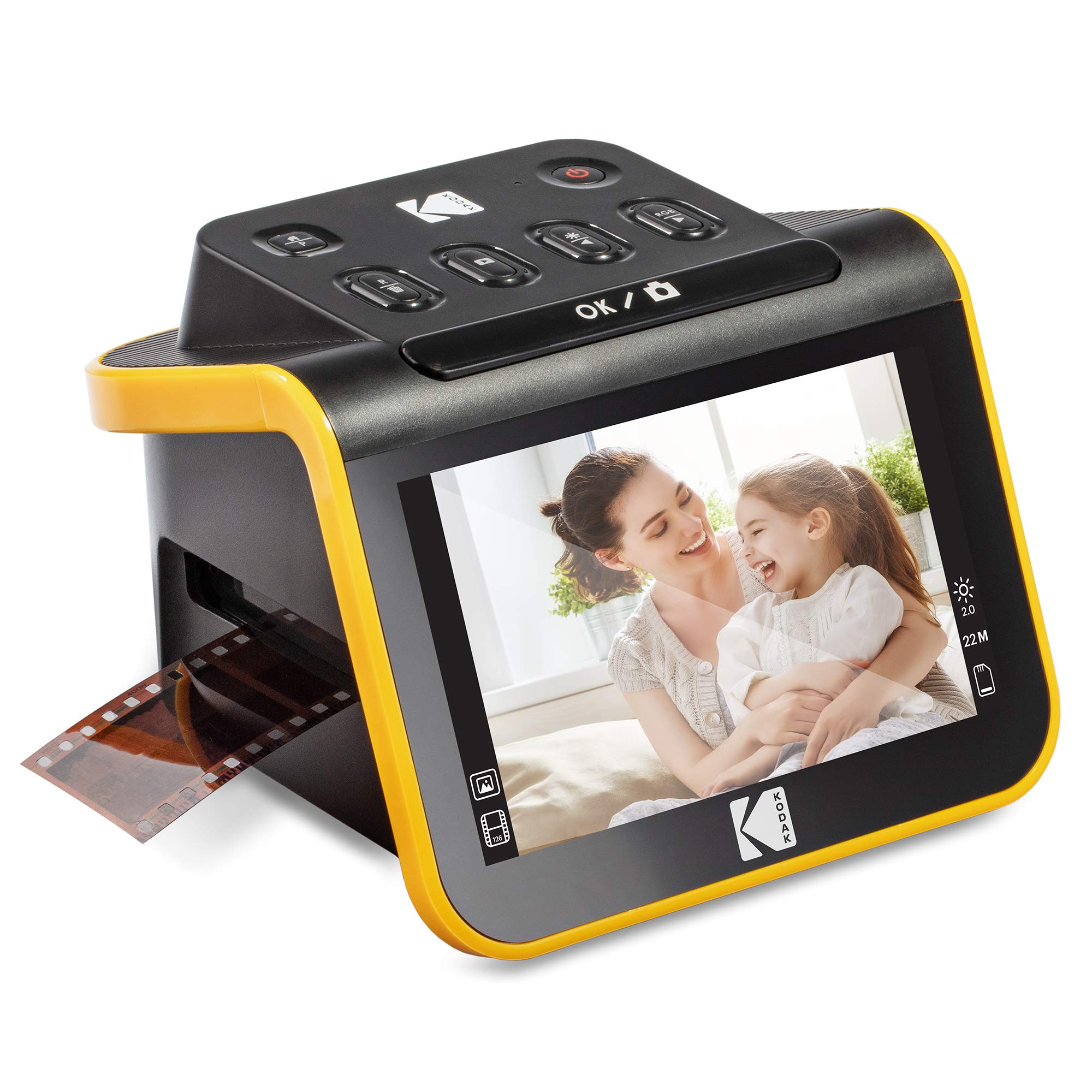
- Five-inch LCD with a wide viewing angle for previewing images and browsing the gallery.
- Converts color and black-and-white negatives, plus slides, in 135, 110, and 126 formats; the supplied slide holder also accommodates 50mm slides.
- Quick-feeding tray supports continuous loading, with adapters for 135, 110, and 126 film and a 50mm slide holder included.
- One-touch capture software can enhance, resize, and convert photos; available controls include film type, color, brightness, and date or time.

Pros
- The five-inch screen gives a useful preview and editing surface without requiring a separate monitor.
- Support for several common film sizes makes it suitable for a mixed family archive.
Consider before buying
- An SD or SDHC card must be purchased separately before you can save scans to removable storage.
- The supported formats are specific; check your negatives and slides before choosing this scanner.
Read the full review summary
The KODAK Slide N Scan combines a five-inch LCD with tools for previewing and making simple edits before saving JPEG images.
It accepts 135, 110, and 126 negatives, plus slides in those formats and 50mm slides, and includes matching film adapters and a slide holder.
A quick-feeding tray is intended to make it easier to work through a series of frames.
This is a practical choice for people who want to handle basic conversion on the scanner itself, without relying on a computer for each step.
It can save directly to an SD or SDHC card, up to 32GB, and can connect to a Type-C USB-enabled computer.
Since the card is not included, plan for that additional item; check your collection’s film formats before buying.
The buying factors
Slide N Scan Scorecard
Editorial scores reflect listed features and buyer fit; they are not laboratory measurements or customer ratings.
Film-format coverage
Handles 135, 110, and 126 film and slides, with support for 50mm slides as well.
On-device preview
The five-inch LCD and gallery mode make it convenient to inspect images on the scanner.
Loading workflow
The quick-feeding tray is designed for continuous loading, and several inserts are included.
Basic editing
One-touch capture software offers resizing and conversion, along with color, brightness, and date or time adjustments.
Standalone saving
Images can be saved directly to supported SD or SDHC cards, though the card is a separate purchase.
Computer connectivity
Type-C connection to a compatible computer offers another workflow, but the product details do not explain computer software requirements.
Key Features and Specifications of Slide N Scan
- Five-inch LCD with a wide viewing angle for previewing images and browsing the gallery.
- Converts color and black-and-white negatives, plus slides, in 135, 110, and 126 formats; the supplied slide holder also accommodates 50mm slides.
- Quick-feeding tray supports continuous loading, with adapters for 135, 110, and 126 film and a 50mm slide holder included.
- One-touch capture software can enhance, resize, and convert photos; available controls include film type, color, brightness, and date or time.
- Saves directly to SD or SDHC cards up to 32GB; the card is not included.
- Includes USB and HDMI cables and a cleaning brush; it also connects to Type-C USB-enabled computers.
Pros and Cons of Slide N Scan
Pros
- The five-inch screen gives a useful preview and editing surface without requiring a separate monitor.
- Support for several common film sizes makes it suitable for a mixed family archive.
- Direct card saving keeps the basic capture workflow simple and computer-independent.
- The included adapters, slide holder, cables, and cleaning brush provide useful starting accessories.
Consider before buying
- An SD or SDHC card must be purchased separately before you can save scans to removable storage.
- The supported formats are specific; check your negatives and slides before choosing this scanner.
- The editing controls are aimed at simple adjustments, so buyers wanting extensive image correction should check whether their preferred workflow offers the tools they need.
Who Should Buy Slide N Scan?
Good fit
Consider the Slide N Scan if your goal is to digitize a family collection made up of 135, 110, or 126 film and slides, and you value seeing each image on a built-in screen as you work.
The large LCD and gallery view can make sorting through memories more comfortable than relying on a small camera display or a computer preview for every frame.
It also suits people who prefer a direct-to-card process. You can preview and adjust images on the device, then save JPEGs to an SD or SDHC card.
Factor in a compatible card, which is not included, and check that its capacity limit works for the size of your project.
The supplied film adapters and slide holder cover the formats listed for the scanner, while the quick-feeding tray is designed to keep loading moving.
That combination is useful for a home project where convenience matters as much as having a simple way to inspect and organize converted photos.
Who should skip it
Look elsewhere if your collection includes film formats beyond 135, 110, and 126, or slides outside the listed slide sizes. Check a sample of your archive before committing, especially if formats are mixed or unlabeled.
This may not be the right fit if you expect detailed retouching controls or want a workflow built around a computer.
Its listed editing options focus on basic adjustments, and the product details do not describe a broader software package.
What the KODAK Slide N Scan Means for Your Film Archive
A screen-first scanning routine
The five-inch LCD is central to the device’s appeal: it lets you view images and use gallery mode directly on the scanner.
That can simplify a casual archiving session, especially when you want to check framing and make basic adjustments before saving.
A display is convenient for review, though it does not by itself tell you how a file will look on a larger screen or in print.
Format compatibility matters more than the headline
The scanner supports 135, 110, and 126 negatives and slides, as well as 50mm slides. The included adapters help feed the listed film sizes, but buyers should identify what they actually own before starting a large project.
If the collection contains formats outside these groups, confirm a separate scanning option for those frames rather than assuming the tray will accommodate them.
Direct saving and project planning
Saving to SD or SDHC cards up to 32GB means a computer is not necessary for the scanner’s stated storage workflow. Because the card is sold separately, set aside one that fits the supported type and capacity.
For a larger archive, decide how you will transfer and back up the images after scanning; the scanner’s direct saving makes capture simpler, but the longer-term organization remains part of the job.
Simple edits for everyday preservation
The one-touch software offers resizing and conversion, with options for film type, color, brightness, and date or time. Those controls are useful for basic preparation while scanning, but they are not a promise of extensive restoration.
If faded, damaged, or color-shifted originals need careful correction, consider whether a separate editing step will be part of your plan.
Alternatives to Slide N Scan
Slide & Negative Scanners alternative
100+ ratings
Read Amazon ReviewsHP FilmScan HPFS500
Compare the HP if touchscreen controls and a specified computer-connected workflow matter to you.
The Slide N Scan may suit buyers who value its gallery-mode LCD and explicitly listed 50mm slide support; confirm the formats and computer requirements that fit your own setup.
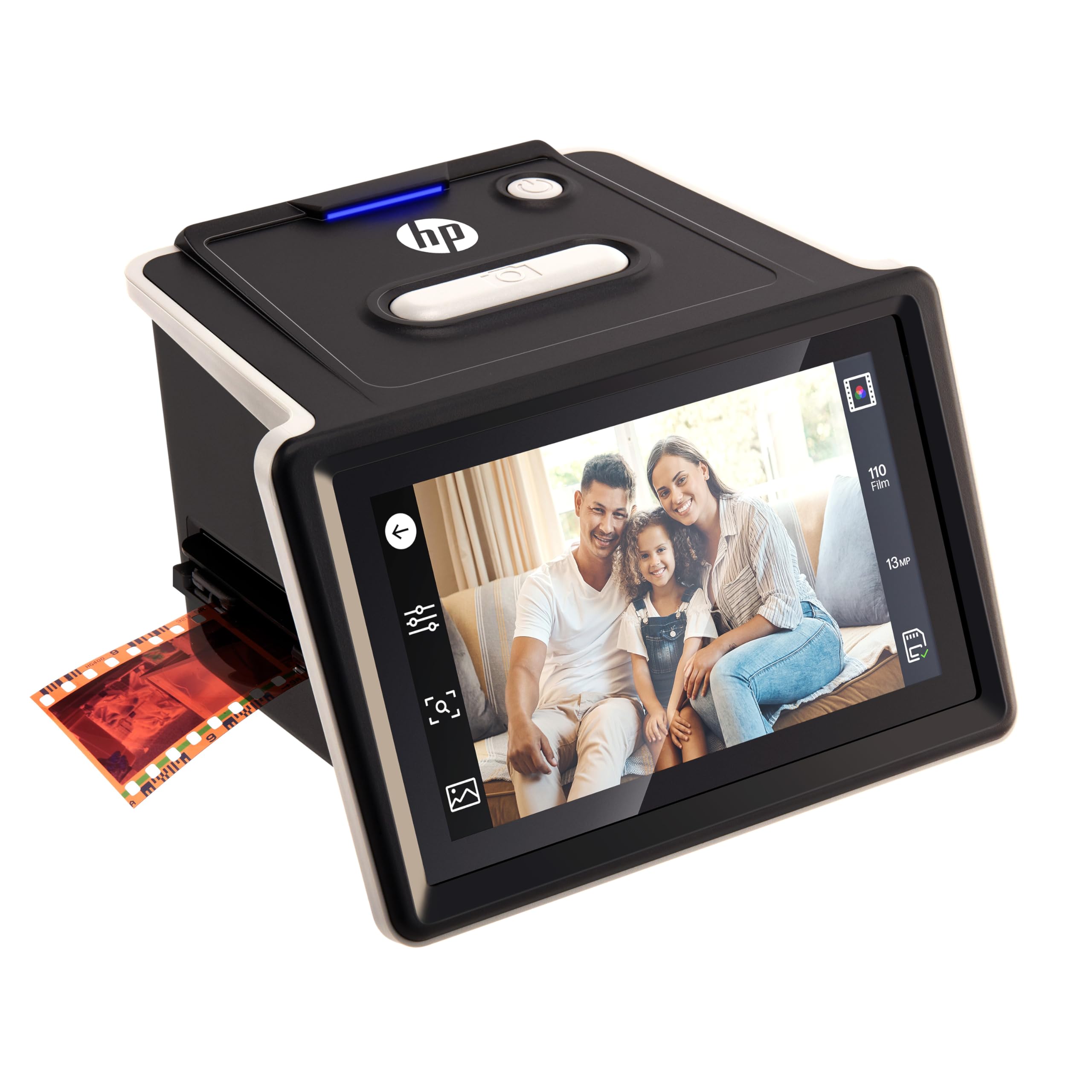
- The HP FilmScan HPFS500 has a five-inch touchscreen, a quick-load tray, and support for 135, 126, and 110 negatives and positive slides.
- It saves to an SD card and is powered through USB-C; its listed system requirements include Windows 10 or later and macOS 10.15 or later.
- The Slide N Scan has a five-inch LCD, direct SD or SDHC saving up to 32GB, and listed support for 135, 110, and 126 film and slides, plus 50mm slides.
Slide & Negative Scanners alternative
11,000+ ratings
Read Amazon ReviewsKODAK SCANZA
Consider the SCANZA if your archive includes Super 8 or 8mm, or if its larger stated card capacity suits your storage plan.
The Slide N Scan has the larger screen and specifically lists 50mm slides, so choose based on the formats you own and how you want to review images.
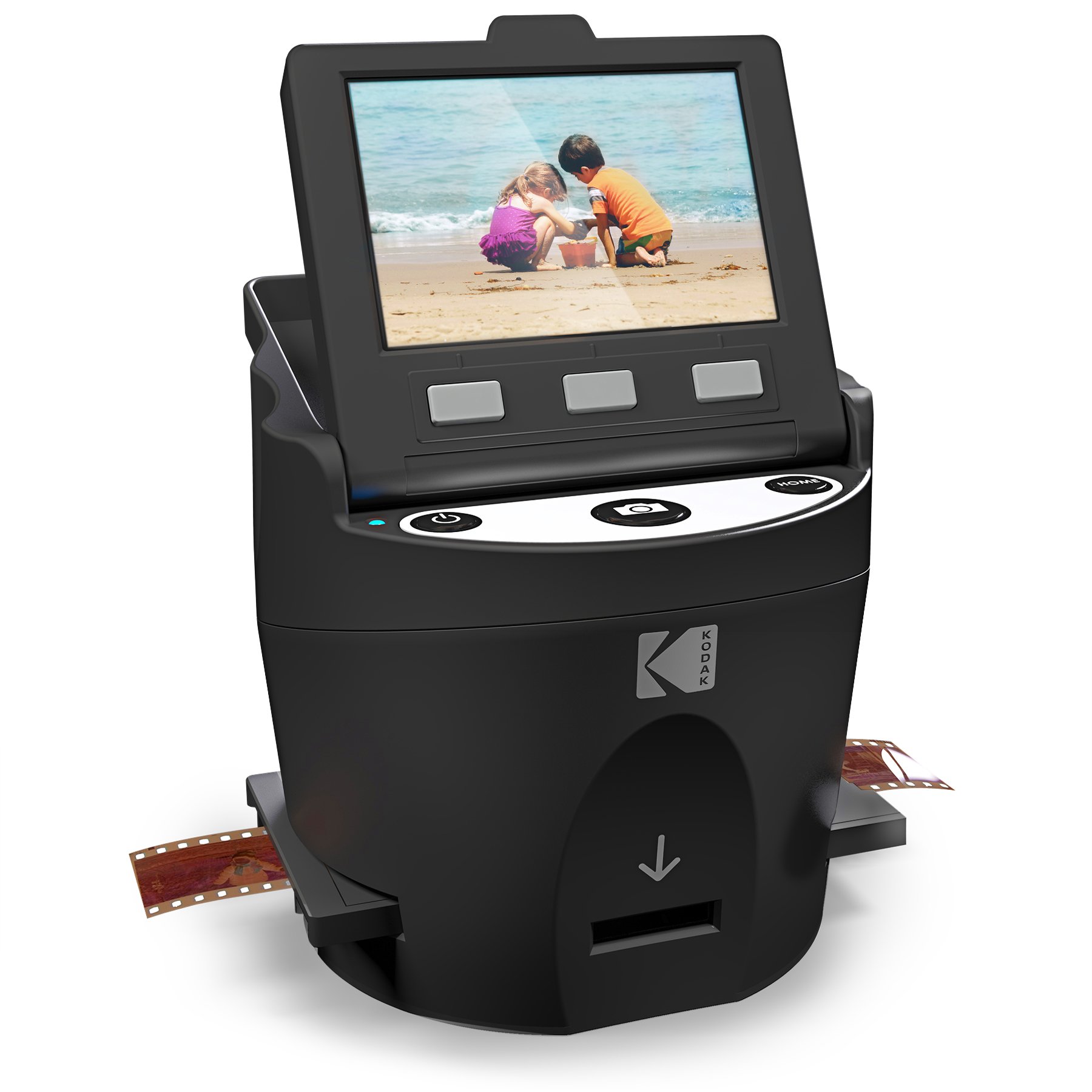
- The KODAK SCANZA lists support for 35mm, 126, 110, Super 8, and 8mm negatives and slides.
- It has a 3.5-inch adjustable-brightness display with tilt, and its supported SD card capacity is up to 128GB.
- The Slide N Scan offers a five-inch LCD and lists 135, 110, and 126 film and slide support, along with 50mm slides.
Is Slide N Scan Worth It?
The KODAK Slide N Scan is worth considering for a home archive of supported negatives and slides when a large built-in screen, straightforward edits, and direct card saving are priorities.
Its quick-loading approach and included format adapters make the process approachable for occasional family digitizing.
Before buying, confirm your film sizes and arrange a compatible SD or SDHC card up to 32GB. Its editing tools are focused on basic adjustments, so buyers seeking more involved restoration should plan for a separate editing step.
Your review at a glance
12,000+ ratings
Read Amazon ReviewsKODAK Slide N Scan
A good fit for families who want to preview, edit, and save common film formats directly from a dedicated scanner.
- Five-inch LCD with a wide viewing angle for previewing images and browsing the gallery.
- Converts color and black-and-white negatives, plus slides, in 135, 110, and 126 formats; the supplied slide holder also accommodates 50mm slides.
- Quick-feeding tray supports continuous loading, with adapters for 135, 110, and 126 film and a 50mm slide holder included.
- One-touch capture software can enhance, resize, and convert photos; available controls include film type, color, brightness, and date or time.