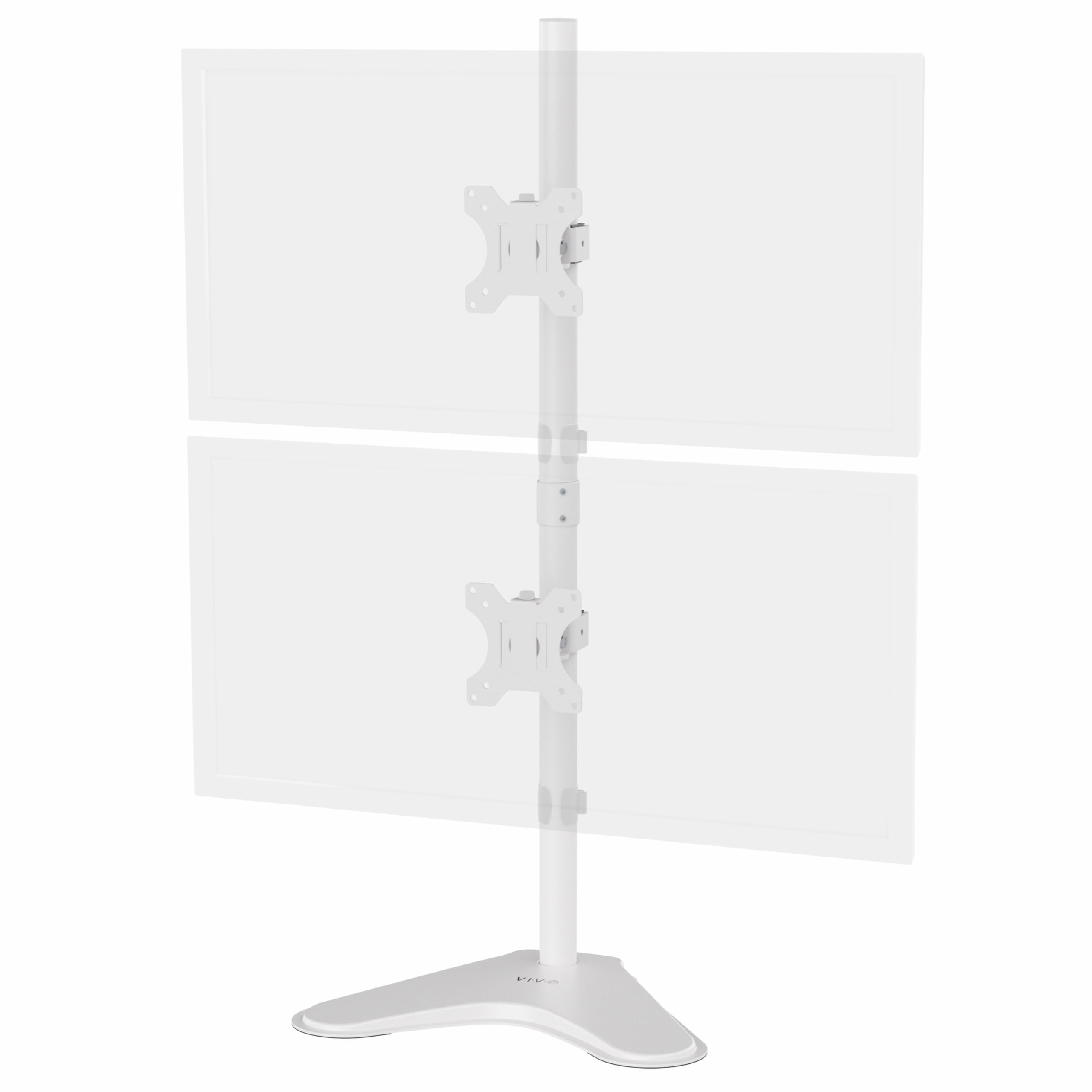
The VIVO Dual Monitor Desk Stand is designed for a specific workspace goal: placing two compatible displays one above the other without clamping the mount to a desk.
This vivo dual monitor stand review looks at its screen limits, adjustment options, and the desk space its freestanding base requires.
VIVO Dual Stand Review Summary
The quick verdict
3,000+ ratings
Read Amazon ReviewsVIVO Dual Monitor Desk Stand
A practical fit for buyers stacking two VESA monitors vertically, including ultrawides up to 34 inches, who want a freestanding base.
- Vertical configuration holds two monitors, each 13 to 34 inches and up to 22 pounds.
- Compatible monitors need 75 × 75 mm or 100 × 100 mm VESA mounting holes.
- Adjustable brackets provide tilt from +45° to −45°, 180° swivel, and 360° rotation.
- Monitor height adjusts along the center pole, and screens can be set in portrait or landscape orientation.

Pros
- Accommodates two larger screens, including compatible ultrawides up to 34 inches.
- Supports a vertical layout without requiring a desk clamp or grommet installation.
Consider before buying
- The base takes up a defined 15.4 × 12.4 inch area of the desktop.
- The 22-pound-per-screen and 34-inch limits rule out monitors outside those ranges.
Read the full review summary
This stand holds two monitors in a vertical stack, supporting screens from 13 to 34 inches and up to 22 pounds each when they use 75 × 75 mm or 100 × 100 mm VESA mounting holes.
Its broad, padded base rests on the desk, while the center pole provides height adjustment and the brackets allow tilt, swivel, and rotation.
It suits a buyer who prefers a stacked layout, wants to avoid attaching a clamp or grommet mount, and has monitors within the stated size, weight, and VESA limits.
The key tradeoff is that a freestanding base occupies desktop area; check that the 15.4 × 12.4 inch footprint fits your preferred position and does not conflict with other desk items.
The buying factors
VIVO Dual Stand Scorecard
Editorial scores reflect listed features and buyer fit; they are not laboratory measurements or customer ratings.
Screen compatibility
Supports two screens from 13 to 34 inches, up to 22 pounds each, with either of two common VESA patterns.
Positioning flexibility
Tilt, swivel, rotation, and pole height adjustment provide several ways to set the stacked displays.
Desk placement
The freestanding base avoids desk-edge attachment, though its 15.4 × 12.4 inch footprint needs room.
Portrait and landscape use
The monitors can be rotated for either orientation, subject to the user’s preferred stacked arrangement.
Cable organization
Integrated cable management is included to help keep display cords arranged along the stand.
Assembly convenience
Removable VESA plates, included hardware, and instructions are intended to simplify installation.
Key Features and Specifications of VIVO Dual Stand
- Vertical configuration holds two monitors, each 13 to 34 inches and up to 22 pounds.
- Compatible monitors need 75 × 75 mm or 100 × 100 mm VESA mounting holes.
- Adjustable brackets provide tilt from +45° to −45°, 180° swivel, and 360° rotation.
- Monitor height adjusts along the center pole, and screens can be set in portrait or landscape orientation.
- The freestanding base measures 15.4 × 12.4 inches and has padding underneath to help protect the desk surface.
- Integrated cable management helps organize cords; removable VESA plates, hardware, and assembly instructions are included.
- The stand has a three-year warranty.
Pros and Cons of VIVO Dual Stand
Pros
- Accommodates two larger screens, including compatible ultrawides up to 34 inches.
- Supports a vertical layout without requiring a desk clamp or grommet installation.
- Multiple adjustment axes and two screen orientations give users room to tailor viewing angles.
- Padded base, cable management, removable VESA plates, and a three-year warranty add useful practical details.
Consider before buying
- The base takes up a defined 15.4 × 12.4 inch area of the desktop.
- The 22-pound-per-screen and 34-inch limits rule out monitors outside those ranges.
- A vertical stack may not suit buyers who need two screens side by side or prefer independent arm placement.
Who Should Buy VIVO Dual Stand?
Good fit
Consider this VIVO stand if you want two monitors arranged vertically and your screens fall within its size and weight limits.
Before buying, confirm the monitor backs have 75 × 75 mm or 100 × 100 mm mounting holes, then measure a clear spot for the base. That simple fit check addresses the two most important compatibility questions.
Its combination of pole height adjustment, bracket articulation, and portrait or landscape positioning is useful when the displays need different viewing angles or orientations.
The padded base and cable management also support a tidier desk setup, while the removable plates and included instructions make the assembly approach straightforward.
The freestanding design can be a good match for desks where you do not want to attach a mount at the edge or through a hole.
Keep in mind that it still needs a stable, open area on the work surface, and the stacked arrangement should match how you use both screens.
Who should skip it
Skip this model if either monitor exceeds 34 inches or 22 pounds, or if its VESA pattern is not 75 × 75 mm or 100 × 100 mm.
A different mounting arrangement will be needed for screens outside those limits.
Look elsewhere if you want two displays positioned side by side, need a mount that attaches to the desk edge, or cannot spare the base’s footprint on the desktop.
What the VIVO Dual Stand means for a stacked setup
Check monitor fit before choosing a layout
The stated screen range is broad enough to include many standard displays and some ultrawides, but both dimensions and weight matter: each monitor must be no larger than 34 inches and no heavier than 22 pounds.
The matching VESA holes are also required. Check the monitor specifications and rear mounting pattern before planning a two-screen stack.
Plan for the base as well as screen clearance
A freestanding mount removes the need to fasten a clamp to a desk edge, but it uses the tabletop itself.
Its 15.4 × 12.4 inch base is a concrete placement requirement, so measure the intended location and consider how the upper and lower screens will sit relative to your seated position and other desk equipment.
Use the adjustment range to tune the stack
The brackets tilt, swivel, and rotate, while the center pole allows height adjustment. These options can help align the screens and change their orientation, but the vertical arrangement remains the defining layout.
Think through which display will sit above the other and whether portrait or landscape orientation works for your tasks before assembly.
Keep cords and setup details manageable
Integrated cable management offers a route for organizing the monitor cords, and removable VESA plates can make attaching the displays more convenient during setup.
The included hardware and instructions cover assembly, while the three-year warranty gives a stated period of manufacturer coverage. Review the included instructions for the mounting sequence and hardware use.
Alternatives to VIVO Dual Stand
Computer Monitor Arms alternative
60,000+ ratings
Read Amazon ReviewsVIVO Dual Ultrawide Monitor Desk Mount STAND-V038
Choose the main stand when a freestanding vertical arrangement and its 34-inch screen limit suit your desk.
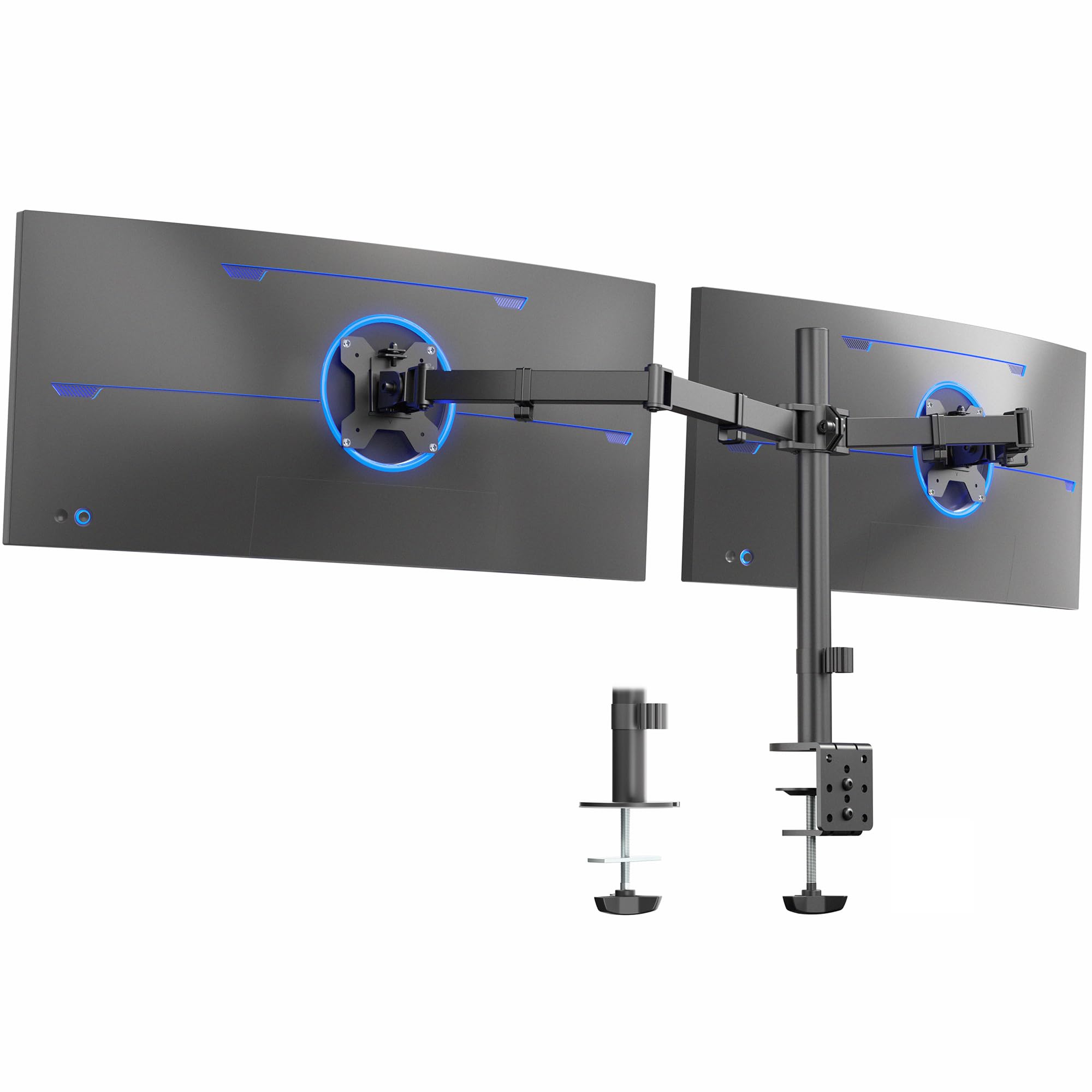
Consider the STAND-V038 if your monitors are larger than 34 inches but no larger than 38 inches, and you can use its clamp or grommet mounting.
- This VIVO model supports two screens up to 38 inches and 22 pounds each, with VESA 75 × 75 mm or 100 × 100 mm mounting holes.
- It uses a desk clamp or optional grommet mount, and its brackets offer tilt, swivel, rotation, and height adjustment.
- The VIVO Dual Monitor Desk Stand supports screens up to 34 inches and uses a freestanding base for a vertical stack.
Computer Monitor Arms alternative
60,000+ ratings
Read Amazon ReviewsVIVO Dual Monitor Desk Mount STAND-V002
The main stand makes more sense for a freestanding setup or compatible screens larger than 30 inches.
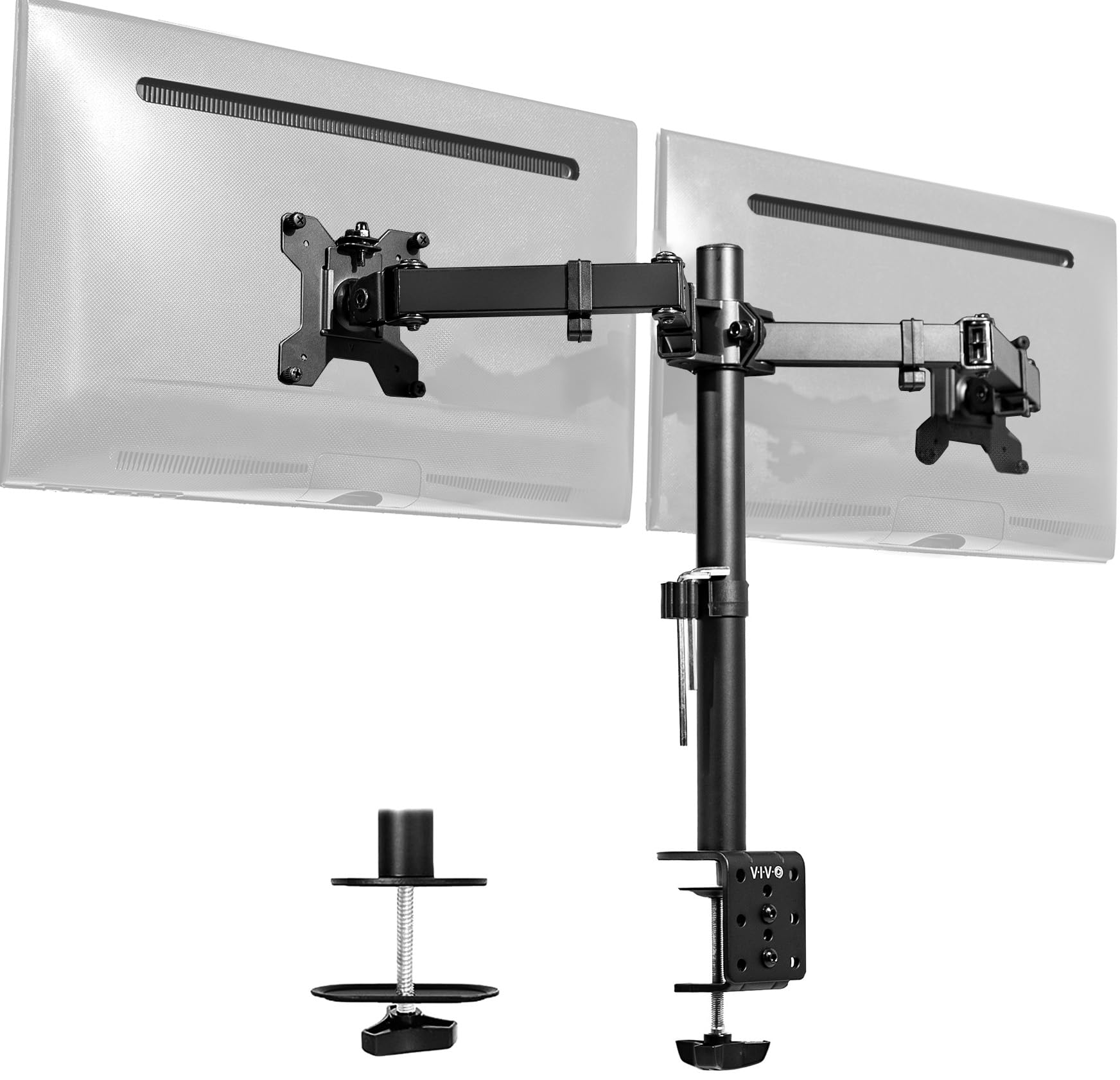
Choose the STAND-V002 if your monitors are 30 inches or smaller and you prefer to secure the mount to the desk rather than use a freestanding base.
- The STAND-V002 is a dual-screen VIVO mount for monitors from 13 to 30 inches and up to 22 pounds each.
- It attaches with a C-clamp or optional grommet mount, allows height adjustment along the pole, and offers tilt, swivel, and rotation.
- The main stand is a freestanding vertical mount for two monitors up to 34 inches and 22 pounds each.
Is VIVO Dual Stand Worth It?
The VIVO Dual Monitor Desk Stand is worth considering when you want two compatible monitors in a vertical stack and prefer a freestanding mount.
Its 34-inch, 22-pound-per-screen limits, VESA requirements, adjustable brackets, and padded base make the intended use reasonably clear.
Measure the base location and confirm both monitors’ weight, size, and mounting pattern before choosing it.
If those checks fit your setup and the vertical layout suits your work, this stand offers a practical way to organize a dual-screen desk; if you need a clamp-mounted or side-by-side arrangement, choose a mount designed for that layout.
Your review at a glance
3,000+ ratings
Read Amazon ReviewsVIVO Dual Monitor Desk Stand
A practical fit for buyers stacking two VESA monitors vertically, including ultrawides up to 34 inches, who want a freestanding base.
- Vertical configuration holds two monitors, each 13 to 34 inches and up to 22 pounds.
- Compatible monitors need 75 × 75 mm or 100 × 100 mm VESA mounting holes.
- Adjustable brackets provide tilt from +45° to −45°, 180° swivel, and 360° rotation.
- Monitor height adjusts along the center pole, and screens can be set in portrait or landscape orientation.